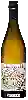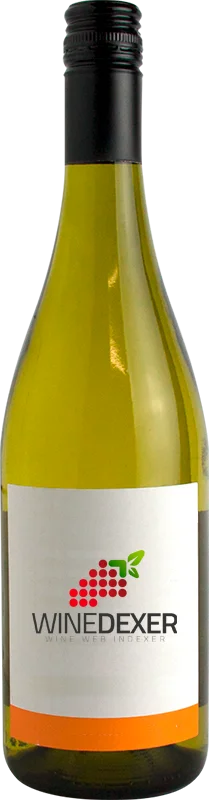
Weingut Matthias GlaserSpätburgunder Blanc de Noir Trocken
 White wine
This wine generally goes well with vegetarian
Food and wine pairings with Spätburgunder Blanc de Noir Trocken
Pairings that work perfectly with Spätburgunder Blanc de Noir Trocken

Original food and wine pairings with Spätburgunder Blanc de Noir Trocken
The Spätburgunder Blanc de Noir Trocken of Weingut Matthias Glaser matches generally quite well with dishes of vegetarian such as recipes of summer tuna quiche.
Details and technical informations about Weingut Matthias Glaser's Spätburgunder Blanc de Noir Trocken.
Discover the grape variety: Oberlin noir
Interspecific crossing between riparia Millardet and gamay obtained by Philip Christian Oberlin (1831-1915) who also created in 1897 the Oberlin Viticultural Institute in Colmar (Haut Rhin). This direct-producing hybrid was widely multiplied in the northeast region of France, from Alsace to Burgundy, also in the Loire Valley and in the Centre where our photographs were taken. Today, Oberlin noir is practically no longer cultivated, but a few vines exist here and there, producing very pleasant, albeit atypical, wines. It is nevertheless registered in the Official Catalogue of Vine Varieties, list A1. - Synonymy: 595 Oberlin (for all the synonyms of the grape varieties, click here!).
Informations about the Weingut Matthias Glaser
The Weingut Matthias Glaser is one of of the world's greatest estates. It offers 18 wines for sale in the of Pfalz to come and discover on site or to buy online.

The wine region of Pfalz
Pfalz is a key wine producing region in western Germany, located between the Rhein/Rhine river and the low-lying Haardt mountain range (a natural continuation of the Alsatian Vosges). It covers a rectangle of land 45 miles (75km) Long and 15 miles (25km) wide. To the NorthLiesRheinhessen; to the South, the French border and Alsace. In terms of both quality and quantity, Pfalz is one of Germany's most important regions, and one which shows great promise for the future.
The word of the wine: Ancestral method
A method of making certain sparkling wines such as blanquette de Limoux, sparkling gaillac or clairette de Die, which consists of a second fermentation in the bottle based on natural sugars and yeasts naturally brought by the grapes (unlike the méthode champenoise, which requires the addition of tirage liquor).