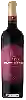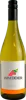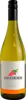
Winery Masseria TrajonePinot Grigio
 White wine



In the mouth this white wine is a powerful.
This wine generally goes well with vegetarian, appetizers and snacks or shellfish.
Taste structure of the Pinot Grigio from the Winery Masseria Trajone
Light | Bold | |
Dry | Sweet | |
Soft | Acidic |
In the mouth the Pinot Grigio of Winery Masseria Trajone in the region of Abruzzo is a powerful.
Food and wine pairings with Pinot Grigio
Pairings that work perfectly with Pinot Grigio



Original food and wine pairings with Pinot Grigio
The Pinot Grigio of Winery Masseria Trajone matches generally quite well with dishes of shellfish, vegetarian or appetizers and snacks such as recipes of fish and shrimp wok with curry, tuna, pepper and tomato quiche or seaweed tartar.
Details and technical informations about Winery Masseria Trajone's Pinot Grigio.
Discover the grape variety: Mencia
Spanish, more precisely from the Duero Valley where it is still very present. According to some ampelographers, it is close to Cabernet Franc.
Last vintages of this wine
The best vintages of Pinot Grigio from Winery Masseria Trajone are 2020, 2013, 2018, 2017 and 2016.
Informations about the Winery Masseria Trajone
The Winery Masseria Trajone is one of of the world's greatest estates. It offers 17 wines for sale in the of Abruzzo to come and discover on site or to buy online.

The wine region of Abruzzo
Abruzzo is an Italian wine region located on the eastern (Adriatic) coast. Its immediate neighbors in CentralItaly are Marche to the North, Lazio to the west and southwest and Molise to the southeast. Abruzzo has one DOCG - Montepulciano d'Abruzzo Colline Teramane - and three DOC wine appellations. The reds and Cerasuolo d'Abruzzo and Montepulciano d'Abruzzo, as well as the white wine appellation Trebbiano d'Abruzzo are the most notable, followed by the lesser-known Controguerra.
The word of the wine: Reassembly
During the vinification process, a "cap" is formed at the top of the vats with the solid parts (skin, pulp, pips, etc.), which contain tannins and colouring elements. Pumping over consists of emptying the vat from the bottom and pouring the juice back to the top, in order to mix the cap and the juice and to favour the exchange and the extraction. This old technique allows a better exchange between the solid parts and the liquid.