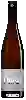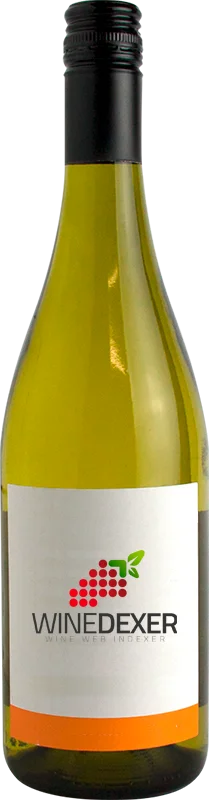
Winery FußerGrauburgunder vom Buntsandstein
 White wine
In the mouth this white wine is a .
This wine generally goes well with pork, cured meat or mushrooms.
Taste structure of the Grauburgunder vom Buntsandstein from the Winery Fußer
Light | Bold | |
Dry | Sweet | |
Soft | Acidic |
In the mouth the Grauburgunder vom Buntsandstein of Winery Fußer in the region of Pfalz is a .
Food and wine pairings with Grauburgunder vom Buntsandstein
Pairings that work perfectly with Grauburgunder vom Buntsandstein


Original food and wine pairings with Grauburgunder vom Buntsandstein

The Grauburgunder vom Buntsandstein of Winery Fußer matches generally quite well with dishes of pork, spicy food or mushrooms such as recipes of coconut from paimpol, island grouper or marco's pasta with bacon.
Details and technical informations about Winery Fußer's Grauburgunder vom Buntsandstein.
Discover the grape variety: Merlot
Merlot is a red grape variety with small black berries that appeared at the end of the 18th century. It is produced in most of the Bordeaux terroirs, where it represents 58% of the planted area, and its best terroir is located in Pomerol and Saint-Emilion on cool, clay-limestone soils. At the mythical Château Pétrus, the wine is made with 95% Merlot, with a dark, dense colour, aromas of red and black fruits and a superb range of flavours, the Merlot transforms during its ageing to give way to notes of prunes, undergrowth and spices. On the palate, it is supple with distinguished tannins. It is often blended with Cabernet Sauvignon. Merlot is no longer exclusive to Bordeaux, it is nowadays vinified all over the world.
Informations about the Winery Fußer
The Winery Fußer is one of of the world's great estates. It offers 24 wines for sale in the of Pfalz to come and discover on site or to buy online.

The wine region of Pfalz
Pfalz is a key wine producing region in western Germany, located between the Rhein/Rhine river and the low-lying Haardt mountain range (a natural continuation of the Alsatian Vosges). It covers a rectangle of land 45 miles (75km) Long and 15 miles (25km) wide. To the NorthLiesRheinhessen; to the South, the French border and Alsace. In terms of both quality and quantity, Pfalz is one of Germany's most important regions, and one which shows great promise for the future.
The word of the wine: Dress
Visual aspect of the wine. The colour is defined by its intensity, clarity, brilliance and colour, which indicate the level of evolution of the wine, thus giving an indication of its vintage.