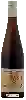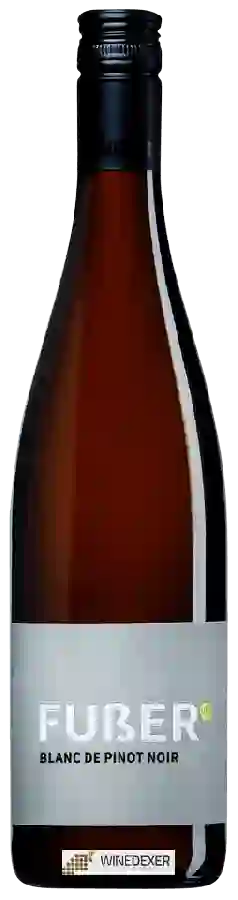
Winery FußerBlanc de Pinot Noir
 White wine


This wine generally goes well with vegetarian
Wine flavors and olphactive analysis






On the nose the Blanc de Pinot Noir of Winery Fußer in the region of Pfalz often reveals types of flavors of non oak, earth or microbio and sometimes also flavors of vegetal, oak or tree fruit.
Food and wine pairings with Blanc de Pinot Noir
Pairings that work perfectly with Blanc de Pinot Noir

Original food and wine pairings with Blanc de Pinot Noir
The Blanc de Pinot Noir of Winery Fußer matches generally quite well with dishes of vegetarian such as recipes of tuna, pepper and tomato quiche.
Details and technical informations about Winery Fußer's Blanc de Pinot Noir.
Discover the grape variety: Malvoisie de Toscane
It was cultivated in ancient times and is believed to be of Greek origin. In Italy, associated with Trebbiano Toscano, it was used to produce the famous Chianti: these two white varieties are no longer part of the vineyard. In France, Tuscan Malvasia is practically unknown. It should be noted that many grape varieties have "malvasia" as a synonym, so confusion between them is always possible.
Last vintages of this wine
The best vintages of Blanc de Pinot Noir from Winery Fußer are 2014, 2013, 2016, 2019 and 2018.
Informations about the Winery Fußer
The Winery Fußer is one of of the world's greatest estates. It offers 24 wines for sale in the of Pfalz to come and discover on site or to buy online.

The wine region of Pfalz
Pfalz is a key wine producing region in western Germany, located between the Rhein/Rhine river and the low-lying Haardt mountain range (a natural continuation of the Alsatian Vosges). It covers a rectangle of land 45 miles (75km) Long and 15 miles (25km) wide. To the NorthLiesRheinhessen; to the South, the French border and Alsace. In terms of both quality and quantity, Pfalz is one of Germany's most important regions, and one which shows great promise for the future.
The word of the wine: BSA
Brut sans année, is said of non-vintage champagnes. It is the technical name of the first price champagne made from wines of different years. They are most often called Tradition, Carte blanche, Réserve. To be drunk quickly, rather as an aperitif.