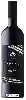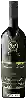
Winery MaremontiDesìo Syrah
 Red wine



In the mouth this red wine is a powerful.
This wine generally goes well with beef, lamb or pasta.

Taste structure of the Desìo Syrah from the Winery Maremonti
Light | Bold | |
Smooth | Tannic | |
Dry | Sweet | |
Soft | Acidic |
In the mouth the Desìo Syrah of Winery Maremonti in the region of Sicily is a powerful.
Food and wine pairings with Desìo Syrah
Pairings that work perfectly with Desìo Syrah



Original food and wine pairings with Desìo Syrah
The Desìo Syrah of Winery Maremonti matches generally quite well with dishes of beef, pasta or lamb such as recipes of roast beef in a crust (onions & mustard), vegetarian lasagna or moussaka with spices.
Details and technical informations about Winery Maremonti's Desìo Syrah.
Discover the grape variety: Malvoisie de Lipari
Intense and candied passito dessert wines with an amber golden robe, a dense and unctuous palate, with signature aromas of dried fruits (dried apricot, fig), honey, white flowers (orange blossom), candied citrus and balsamic notes. A legendary Aeolian profile with very great length. The absolute star of the Malvasia delle Lipari DOC, one of the great Mediterranean dessert wines. French synonym for Malvasia di Lipari, native Italian white grape from the Aeolian Islands.
Last vintages of this wine
The best vintages of Desìo Syrah from Winery Maremonti are 0
Informations about the Winery Maremonti
The Winery Maremonti is one of of the world's greatest estates. It offers 34 wines for sale in the of Sicily to come and discover on site or to buy online.

The wine region of Sicily
Major qualitative renewal. Sunny, expressive reds: fleshy, spicy Nero d'Avola (black cherry, blackberry, liquorice), fine, mineral Nerello Mascalese on Etna (recalls Pinot Noir), light, crisp Frappato in Cerasuolo di Vittoria DOCG. Lively, saline whites: Catarratto, fat, iodised Grillo, taut Carricante, floral Inzolia. Amber, walnutty fortified Marsala.
The word of the wine: Deposit
Solid particles that can naturally coat the bottom of a bottle of wine. It is rather a guarantee that the wine has not been mistreated: in fact, to avoid the natural deposit, rather violent processes of filtration or cold passage (- 7 or - 8 °C) are used in order to precipitate the tartar (the small white crystals that some people confuse with crystallized sugar: just taste to dissuade you from it)