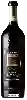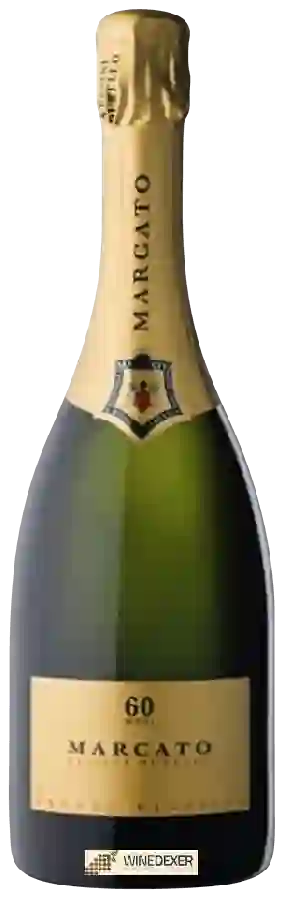
Winery Marcato60 Mesi Lessini Durello Brut
 Sparkling wine


This wine generally goes well with pork, poultry or beef.
Wine flavors and olphactive analysis

Food and wine pairings with 60 Mesi Lessini Durello Brut
Pairings that work perfectly with 60 Mesi Lessini Durello Brut



Original food and wine pairings with 60 Mesi Lessini Durello Brut


The 60 Mesi Lessini Durello Brut of Winery Marcato matches generally quite well with dishes of beef, lamb or pork such as recipes of quick beef bourguignon, merguez - courgettes gratin (leftover barbecue) or light stuffed tomatoes.
Details and technical informations about Winery Marcato's 60 Mesi Lessini Durello Brut.
Discover the grape variety: Carminoir
Intraspecific crossing between pinot noir and cabernet-sauvignon obtained in 1982 at the Federal Research Station Agroscope Changins in Wadenswil (Switzerland). It can be found in Switzerland, Germany, Belgium, ... in France it is very little known.
Last vintages of this wine
The best vintages of 60 Mesi Lessini Durello Brut from Winery Marcato are 2008, 2007, 0
Informations about the Winery Marcato
The Winery Marcato is one of of the world's greatest estates. It offers 26 wines for sale in the of Veneto to come and discover on site or to buy online.

The wine region of Veneto
Veneto is an important and growing wine region in northeastern Italy. Veneto is administratively Part of the Triveneto area, aLong with its smaller neighbors, Trentino-Alto Adige and Friuli-Venezia Giulia. In terms of geography, culture and wine styles, it represents a transition from the Alpine and Germanic-Slavic end of Italy to the warmer, drier, more Roman lands to the South. Veneto is slightly smaller than the other major Italian wine regions - Piedmont, Tuscany, Lombardy, Puglia and Sicily - but it produces more wine than any of them.
The word of the wine: Beurré
Typical aroma of white wines aged in oak barrels and wines that have undergone malolactic fermentation.