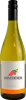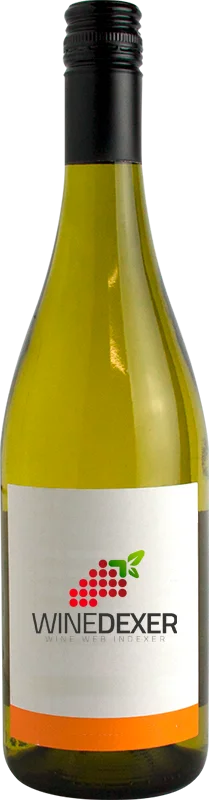
Winery Louis LegrandBlanc Moelleux
 White wine


In the mouth this white wine is a .
This wine generally goes well with vegetarian, poultry or lean fish.
Taste structure of the Blanc Moelleux from the Winery Louis Legrand
Light | Bold | |
Dry | Sweet | |
Soft | Acidic |
In the mouth the Blanc Moelleux of Winery Louis Legrand in the region of Languedoc-Roussillon is a .
Food and wine pairings with Blanc Moelleux
Pairings that work perfectly with Blanc Moelleux



Original food and wine pairings with Blanc Moelleux


The Blanc Moelleux of Winery Louis Legrand matches generally quite well with dishes of pasta, vegetarian or poultry such as recipes of spaghetti neapolitan style, goat cheese and bacon quiche or lemongrass chicken.
Details and technical informations about Winery Louis Legrand's Blanc Moelleux.
Discover the grape variety: Delrho
Intraspecific crossing obtained in 1959 between Alphonse Lavallée and Csaba pearl. Delrho has been registered in the Official Catalogue of Table Grape Varieties, list A1, since 1986, but today it is practically not multiplied.
Last vintages of this wine
The best vintages of Blanc Moelleux from Winery Louis Legrand are 2017
Informations about the Winery Louis Legrand
The Winery Louis Legrand is one of of the world's greatest estates. It offers 6 wines for sale in the of Languedoc to come and discover on site or to buy online.

The wine region of Languedoc
Languedoc (formerly Coteaux du Languedoc) is a key appellation used in the Languedoc-Roussillon wine region of southern France. It covers Dry table wines of all three colors (red, white and rosé) from the entire region, but leaves Sweet and Sparkling wines to other more specialized appellations. About 75% of all Languedoc wines are red, with the remaining 25% split roughly down the middle between whites and rosés. The appellation covers most of the Languedoc region and almost a third of all the vineyards in France.
The wine region of Languedoc-Roussillon
Languedoc (formerly Coteaux du Languedoc) is a key appellation used in the Languedoc-Roussillon wine region of southern France. It covers Dry table wines of all three colors (red, white and rosé) from the entire region, but leaves Sweet and Sparkling wines to other more specialized appellations. About 75% of all Languedoc wines are red, with the remaining 25% split roughly down the middle between whites and rosés. The appellation covers most of the Languedoc region and almost a third of all the vineyards in France.
The word of the wine: Maturing (champagne)
After riddling, the bottles are stored on "point", upside down, with the neck of one bottle in the bottom of the other. The duration of this maturation is very important: in contact with the dead yeasts, the wine takes on subtle aromas and gains in roundness and fatness. A brut without year must remain at least 15 months in the cellar after bottling, a vintage 36 months.