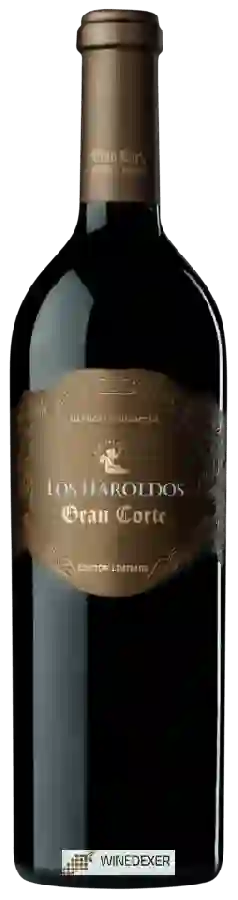
Winery Los HaroldosGran Corte Edición Limitada
 Red wine


This wine generally goes well with

Wine flavors and olphactive analysis



On the nose the Gran Corte Edición Limitada of Winery Los Haroldos in the region of Mendoza often reveals types of flavors of non oak, earth or oak and sometimes also flavors of spices, red fruit or black fruit.
Details and technical informations about Winery Los Haroldos's Gran Corte Edición Limitada.
Discover the grape variety: Camaralet de Lasseube
Aromatic, structured dry whites with a pale golden robe, an ample palate and preserved acidity, showing rare signature spicy aromas (fennel, pepper, cinnamon, anise), white flowers and yellow fruits. A unique profile with a very strong personality. Very rare (less than 1 ha cultivated), preserved by a few Béarnais winegrowers and blended with Lauzet and Gros Manseng in heritage cuvées. An indigenous French variety from the Béarn (Pyrénées-Atlantiques).
Last vintages of this wine
The best vintages of Gran Corte Edición Limitada from Winery Los Haroldos are 2017, 2015, 0
Informations about the Winery Los Haroldos
The Winery Los Haroldos is one of of the world's greatest estates. It offers 73 wines for sale in the of Mendoza to come and discover on site or to buy online.

The wine region of Mendoza
World capital of Malbec: powerful, deep reds with blackberry, plum, violet and sweet spice, round tannins and vivid fruit. Also firm Cabernet Sauvignon, supple, juicy Bonarda, aromatic floral white Torrontés. High-altitude vineyards (800-1,700 m) at the foot of the Andes, dry continental climate irrigated by glacial waters. ~80% of Argentine output across 150,000 ha.
The word of the wine: Consistency
In tasting, it is the equivalent of chewing (the chewiness of a tannic red wine is also mentioned). We then speak of firmness, fluidity, softness, hardness, and why not the crunchiness of an early wine by reference to the grape.