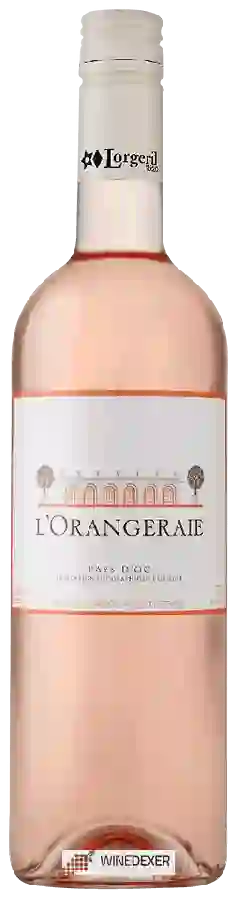
Winery L'OrangeraieRosé
 Pink wine


In the mouth this pink wine is a with a nice freshness.
This wine generally goes well with vegetarian, appetizers and snacks or lean fish.

Taste structure of the Rosé from the Winery L'Orangeraie
Light | Bold | |
Dry | Sweet | |
Soft | Acidic |
In the mouth the Rosé of Winery L'Orangeraie in the region of Pays d'Oc is a with a nice freshness.
Wine flavors and olphactive analysis



On the nose the Rosé of Winery L'Orangeraie in the region of Pays d'Oc often reveals types of flavors of cherry, citrus or minerality and sometimes also flavors of strawberries, raspberry or apricot.
Food and wine pairings with Rosé
Pairings that work perfectly with Rosé



Original food and wine pairings with Rosé


The Rosé of Winery L'Orangeraie matches generally quite well with dishes of pasta, vegetarian or appetizers and snacks such as recipes of italian pasta salad, quiche lorraine or biscuits for dogs.
Details and technical informations about Winery L'Orangeraie's Rosé.
Discover the grape variety: Graciano
Structured, deep reds with an ink-dark robe, firm tannins and a dense palate of intense blackfruit (blackberry, blackcurrant), black cherry, violet, spices, black pepper, Mediterranean herbs and balsamic notes. Fine ageing potential; adds structure and length to blends. Essential component of great Rioja DOCa and Navarra DO reds, also as an identity single varietal. Native Spanish grape, signature of Riojan finesse.
Last vintages of this wine

The best vintages of Rosé from Winery L'Orangeraie are 2019, 2017, 2016, 2018 and 2015.
Informations about the Winery L'Orangeraie
The Winery L'Orangeraie is one of of the world's greatest estates. It offers 18 wines for sale in the of Pays d'Oc to come and discover on site or to buy online.

The wine region of Pays d'Oc
The single-grape IGP par excellence: modern, accessible, frank and fruity wines, the popular signature of the Midi. Spicy Syrah reds (pepper, blackberry), round Merlot, structured Cabernet, generous Grenache, supple Cinsault. Crisp, tangy rosés. Opulent Chardonnay whites, lively Sauvignon, floral, apricoty Viognier.
The word of the wine: Malolactic fermentation
Called second fermentation or malo for short. It is the degradation (under the effect of bacteria) of the malic acid naturally present in the wine into milder, less aggressive lactic acid. Some producers or wineries refuse this operation by "blocking the malo" (by cold and adding SO2) to keep a maximum of acidity which carries the aromas and accentuates the sensation of freshness.