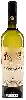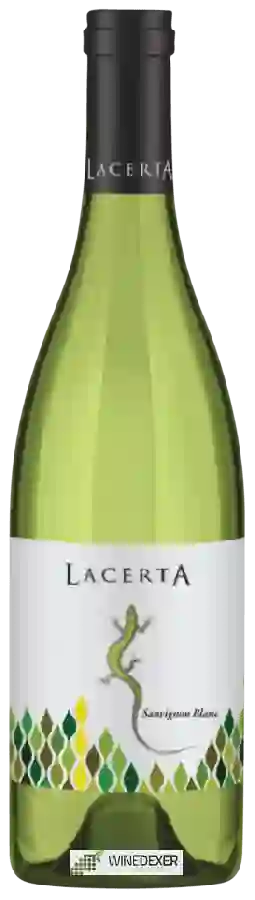
Winery Lacerta (RO)Sauvignon Blanc
 White wine



This wine generally goes well with vegetarian, rich fish (salmon, tuna etc) or shellfish.

Wine flavors and olphactive analysis

On the nose the Sauvignon Blanc of Winery Lacerta (RO) in the region of Dealu Mare often reveals types of flavors of citrus fruit.
Food and wine pairings with Sauvignon Blanc
Pairings that work perfectly with Sauvignon Blanc



Original food and wine pairings with Sauvignon Blanc
The Sauvignon Blanc of Winery Lacerta (RO) matches generally quite well with dishes of rich fish (salmon, tuna etc), shellfish or vegetarian such as recipes of salmon and avocado chirashi, seafood, chorizo and chicken paella from patou or salmon and goat cheese quiche.
Details and technical informations about Winery Lacerta (RO)'s Sauvignon Blanc.
Discover the grape variety: Pamid
Light, lightly coloured reds for early drinking with a clear ruby robe, soft tannins, airy palate and moderate acidity; simple aromas of red fruits (cherry, strawberry) and discrete floral notes. Classic Balkan thirst-quencher. A historic pillar of Bulgarian table wines, less planted today but preserved in southern Bulgaria and North Macedonia. Ancient indigenous black grape of Bulgaria.
Last vintages of this wine
The best vintages of Sauvignon Blanc from Winery Lacerta (RO) are 2018, 2016, 2014, 0 and 2015.
Informations about the Winery Lacerta (RO)
The Winery Lacerta (RO) is one of of the world's great estates. It offers 38 wines for sale in the of Dealu Mare to come and discover on site or to buy online.

The wine region of Dealu Mare
Romania's most compact wine massif, south of the Carpathians on the 45th parallel (like Bordeaux). Signature Feteasca Neagra in red: a dense, structured Romanian native with signature notes of ripe plum, blackberry, violet, leather, tobacco and sweet spice, round tannins — a national identity. Also Bordeaux blends (firm Cabernet Sauvignon, supple Merlot) and fresh Pinot Noir. Peppery Syrah booming.
The word of the wine: Performance
Quantity of grapes harvested per hectare. In AOC, the average yield is limited on the proposal of the appellation syndicate, validated by the Inao. The use of high-performance plant material (especially clones) and better control of vine diseases have increased yields. This is not without consequences on the quality of the wines (dilution) and on the state of the market (too much wine). We must not over-simplify: low yields are not synonymous with quality, and it is often in years with generous harvests that we find the greatest vintages (1982 and 1986 in Bordeaux, 1996 in Champagne, 1990 and 2005 in Burgundy...).