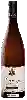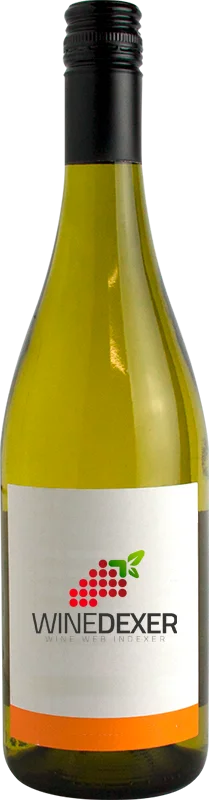
Domaine de la BretonnièreCap à l'Ouest Sauvignon
 White wine
This wine generally goes well with vegetarian, rich fish (salmon, tuna etc) or shellfish.
Food and wine pairings with Cap à l'Ouest Sauvignon
Pairings that work perfectly with Cap à l'Ouest Sauvignon



Original food and wine pairings with Cap à l'Ouest Sauvignon
The Cap à l'Ouest Sauvignon of Domaine de la Bretonnière matches generally quite well with dishes of rich fish (salmon, tuna etc), shellfish or vegetarian such as recipes of cucumber pie, stuffed squid or salmon and goat cheese quiche.
Details and technical informations about Domaine de la Bretonnière's Cap à l'Ouest Sauvignon.
Discover the grape variety: Meslier Saint-François
Meslier Saint François is a French grape variety that comes from the Gatinais, located south of the Paris basin. It was obtained from a cross between Chenin and Gouais Blanc. It is planted on a surface area of 50 ha in France and is often confused with Arbois, hence the synonym it shares with the latter, Orbois. Its berries and clusters are of normal size. Its adult leaves have convex teeth. Meslier Saint François is not very vigorous, but it remains fertile. It buds early, 3 days before Chasselas. It is often exposed to spring frosts and is susceptible to oidium and grey rot. Meslier Saint François produces flat, light wines with little alcohol. When distilled, its eaux de vie are full of bouquet and fine. It can thus be used in the blending of grape varieties that produce cognac or armagnac.
Last vintages of this wine


The best vintages of Cap à l'Ouest Sauvignon from Domaine de la Bretonnière are 0
Informations about the Domaine de la Bretonnière
The Domaine de la Bretonnière is one of of the world's greatest estates. It offers 24 wines for sale in the of Loire Valley to come and discover on site or to buy online.

The wine region of Loire Valley
The Loire Valley is a key wine region in western France. It follows the course of the Loire River on its Long journey through the heart of France, from the inland hills of the Auvergne to the plains of the French Atlantic coast near Nantes (Muscadet country). Important in terms of quantity and quality, the region produces large quantities (about 4 million h/l each year) of everyday wines, as well as some of France's greatest wines. Diversity is another of the region's major assets; the styles of wine produced here range from the light, tangy Muscadet to the Sweet, honeyed Bonnezeaux, the Sparkling whites of Vouvray and the juicy, Tannic reds of Chinon and Saumur.
The word of the wine: Turbidity
The state of a cloudy wine, due to the presence of colloidal suspensions that prevent the passage of light.