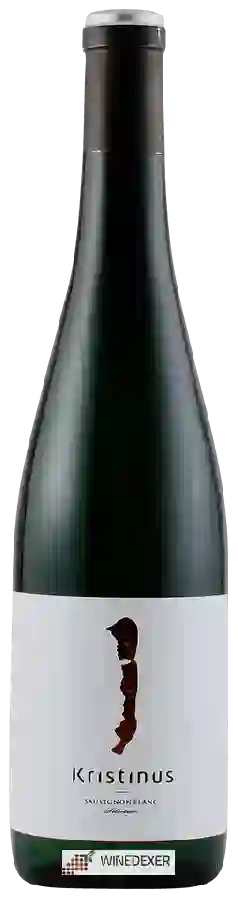
Winery KristinusSelection Sauvignon Blanc
 White wine


This wine generally goes well with vegetarian, rich fish (salmon, tuna etc) or shellfish.
Food and wine pairings with Selection Sauvignon Blanc
Pairings that work perfectly with Selection Sauvignon Blanc



Original food and wine pairings with Selection Sauvignon Blanc
The Selection Sauvignon Blanc of Winery Kristinus matches generally quite well with dishes of rich fish (salmon, tuna etc), shellfish or vegetarian such as recipes of salmon blanquette, shrimp marinade or spinach and goat cheese quiche.
Details and technical informations about Winery Kristinus's Selection Sauvignon Blanc.
Discover the grape variety: Picolit noir
A very old grape variety, which almost disappeared, cultivated for a very long time in the north-east of Italy, more precisely in the region of Friuli bordering with Aurelia and Slovenia. It can be found in Italy, but also in Spain, ... in France it is completely unknown. Note that it is not related to the white picolit.
Last vintages of this wine
The best vintages of Selection Sauvignon Blanc from Winery Kristinus are 2016, 0
Informations about the Winery Kristinus
The Winery Kristinus is one of of the world's greatest estates. It offers 62 wines for sale in the of Balaton to come and discover on site or to buy online.

The wine region of Balaton
Balatonboglar (South Balaton) is one of several wine regions on the shores of Lake Balaton, in the Transdanubia region of western Hungary. Lake Balaton is a Long, thin freshwater lake measuring almost 80 kilometers (50 miles) in Length, sometimes referred to as the 'Hungarian Sea. ' It is the largest lake in Central Europe and Hungary's most popular tourist destination. A wide portfolio of the popular, internationally recognized Grape varieties are grown here, including a number of the French classics.
The word of the wine: Vinification of sweet wines
Moelleux and liquoreux wines are characterized by the presence of residual sugars (natural sugar of the grape), not transformed into alcohol under the effect of yeasts. The fermentation is stopped by cold and by the addition of sulphur dioxide (sulphur).