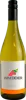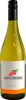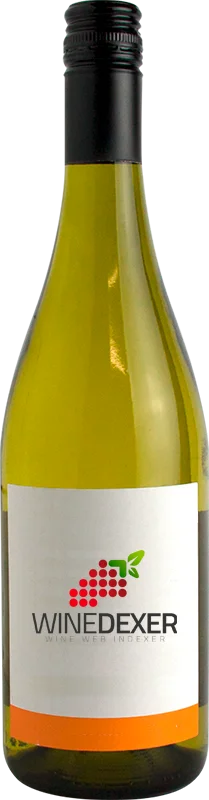
Winery KokoroSauvignon Blanc Seco
 White wine


In the mouth this white wine is a with a nice freshness.
This wine generally goes well with vegetarian, shellfish or goat cheese.
Taste structure of the Sauvignon Blanc Seco from the Winery Kokoro
Light | Bold | |
Dry | Sweet | |
Soft | Acidic |
In the mouth the Sauvignon Blanc Seco of Winery Kokoro in the region of Central Valley is a with a nice freshness.
Food and wine pairings with Sauvignon Blanc Seco
Pairings that work perfectly with Sauvignon Blanc Seco


Original food and wine pairings with Sauvignon Blanc Seco
The Sauvignon Blanc Seco of Winery Kokoro matches generally quite well with dishes of shellfish, vegetarian or goat cheese such as recipes of shrimp, coconut and ginger soup, goat cheese and bacon quiche or leek and fresh goat cheese quiche.
Details and technical informations about Winery Kokoro's Sauvignon Blanc Seco.
Discover the grape variety: Merlot
Merlot is a red grape variety with small black berries that appeared at the end of the 18th century. It is produced in most of the Bordeaux terroirs, where it represents 58% of the planted area, and its best terroir is located in Pomerol and Saint-Emilion on cool, clay-limestone soils. At the mythical Château Pétrus, the wine is made with 95% Merlot, with a dark, dense colour, aromas of red and black fruits and a superb range of flavours, the Merlot transforms during its ageing to give way to notes of prunes, undergrowth and spices. On the palate, it is supple with distinguished tannins. It is often blended with Cabernet Sauvignon. Merlot is no longer exclusive to Bordeaux, it is nowadays vinified all over the world.
Last vintages of this wine
The best vintages of Sauvignon Blanc Seco from Winery Kokoro are 2019, 0, 2017, 2018
Informations about the Winery Kokoro
The Winery Kokoro is one of of the world's greatest estates. It offers 9 wines for sale in the of Central Valley to come and discover on site or to buy online.

The wine region of Central Valley
The Central Valley (El Valle Central) of Chile is one of the most important wine-producing areas in South America in terms of Volume. It is also one of the largest wine regions, stretching from the Maipo Valley (just south of Santiago) to the southern end of the Maule Valley. This is a distance of almost 250 miles (400km) and covers a number of Climate types. The Central Valley wine region is easily (and often) confused with the geological Central Valley, which runs north–south for more than 620 miles (1000km) between the Pacific Coastal Ranges and the lower Andes.
The word of the wine: Trader-breeder
In the major wine regions, the négociant does not simply buy and resell the wines but, from very young wines, carries out all the maturing operations until bottling.