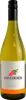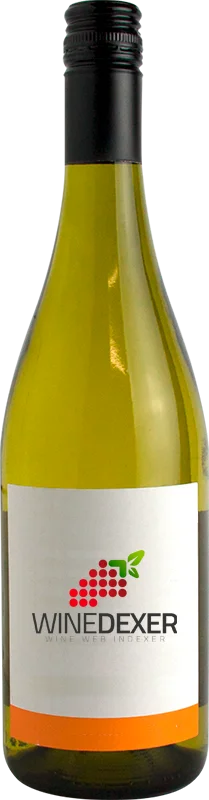
Winery KoeglerGrüner Veltliner
 White wine



This wine generally goes well with pork, vegetarian or lean fish.
Food and wine pairings with Grüner Veltliner
Pairings that work perfectly with Grüner Veltliner



Original food and wine pairings with Grüner Veltliner



The Grüner Veltliner of Winery Koegler matches generally quite well with dishes of pork, rich fish (salmon, tuna etc) or shellfish such as recipes of penne à la toscane, sliced tuna with tomato sauce or marinated shrimp sautéed asian style.
Details and technical informations about Winery Koegler's Grüner Veltliner.
Discover the grape variety: Mondeuse noire
Cultivated for a very long time in Savoie, it is not the black form of mondeuse blanche and Mondeuse grise is a natural mutation of mondeuse noire. According to Thierry Lacombe (I.N.R.A./Montpellier), the latter is the result of a natural intraspecific crossing between the black tressot and the white mondeuse. Mondeuse grise and Mondeuse noire are both registered in the official catalogue of wine grape varieties, list A1.
Last vintages of this wine
The best vintages of Grüner Veltliner from Winery Koegler are 0
Informations about the Winery Koegler
The Winery Koegler is one of of the world's greatest estates. It offers 17 wines for sale in the of Rheingau to come and discover on site or to buy online.

The wine region of Rheingau
Rheingau is one of the most important of Germany's 13 Anbaugebiete wine regions. However it is far from the biggest; with 3,076 hectares (7,600 acres) of Vineyard">Vineyards documented in 2012, its output is around one tenth of that from the Pfalz and Rheinhessen regions. Located on the Rhine a 20-minute drive west of Frankfurt, the -gau suffix denotes that it was once a county of the Frankish Empire. The classic Rheingau wine is a DryRiesling with pronounced Acidity and aromas of citrus fruits and smoke-tinged minerality – typically more "masculine" than its equivalent from the Mosel.
The word of the wine: Thermoregulation
Control of the vinification temperatures (by circulating hot or cold water on the walls of the vats, for example). This is a major step forward, which in particular helps to preserve the freshness of the aromas threatened by excessive temperature rises during fermentation.