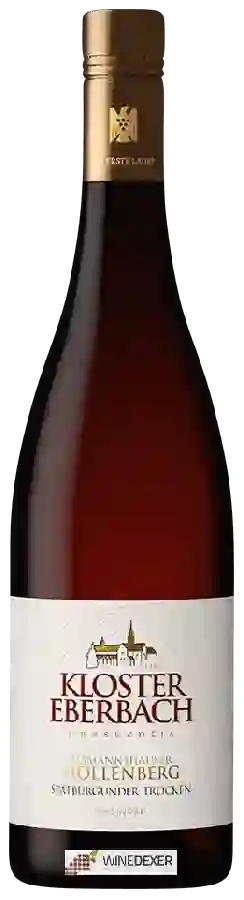
Winery Kloster EberbachAssmannshäuser Höllenberg Spätburgunder Trocken
 Red wine


In the mouth this red wine is a with a nice freshness.
This wine generally goes well with poultry, beef or veal.

Taste structure of the Assmannshäuser Höllenberg Spätburgunder Trocken from the Winery Kloster Eberbach
Light | Bold | |
Smooth | Tannic | |
Dry | Sweet | |
Soft | Acidic |
In the mouth the Assmannshäuser Höllenberg Spätburgunder Trocken of Winery Kloster Eberbach in the region of Rheingau is a with a nice freshness.
Wine flavors and olphactive analysis


On the nose the Assmannshäuser Höllenberg Spätburgunder Trocken of Winery Kloster Eberbach in the region of Rheingau often reveals types of flavors of non oak, earth or oak and sometimes also flavors of red fruit.
Food and wine pairings with Assmannshäuser Höllenberg Spätburgunder Trocken
Pairings that work perfectly with Assmannshäuser Höllenberg Spätburgunder Trocken



Original food and wine pairings with Assmannshäuser Höllenberg Spätburgunder Trocken

The Assmannshäuser Höllenberg Spätburgunder Trocken of Winery Kloster Eberbach matches generally quite well with dishes of beef, veal or game (deer, venison) such as recipes of cataplana with seafood, shoulder of lamb stuffed with cognac or duck breast with honey sauce.
Details and technical informations about Winery Kloster Eberbach's Assmannshäuser Höllenberg Spätburgunder Trocken.
Discover the grape variety: Amigne
Aromatic, structured whites with a golden robe, ample palate and preserved acidity, showing refined aromas of yellow fruits (pear, apricot), candied citrus, mandarin, linden, honey and white flower notes. Vinified dry, off-dry or sweet (a scale of 1 to 3 bees indicates residual sugar). Almost exclusive star of Vétroz AOC in the central Valais. Very old autochthonous Valais variety, probably of Roman origin, one of Switzerland's discreet treasures.
Last vintages of this wine
The best vintages of Assmannshäuser Höllenberg Spätburgunder Trocken from Winery Kloster Eberbach are 2017, 2016, 2015, 0
Informations about the Winery Kloster Eberbach
The Winery Kloster Eberbach is one of of the world's great estates. It offers 107 wines for sale in the of Rheingau to come and discover on site or to buy online.

The wine region of Rheingau
Historic cradle of great German Riesling: age-worthy whites of rare precision, from taut dry (Trocken) to botrytised sweet (Auslese, Beerenauslese, TBA) with notes of peach, citrus, acacia honey, noble petrol and slatey minerality. Riesling king on ~80% of the vineyard. Also Spätburgunder (Pinot Noir, 8%), notably the fine, silky Assmannshausen. 3,100 ha on south-facing slopes overlooking the Rhine (Hesse).
The word of the wine: Mou
Said of a wine unbalanced by its lack of acidity.