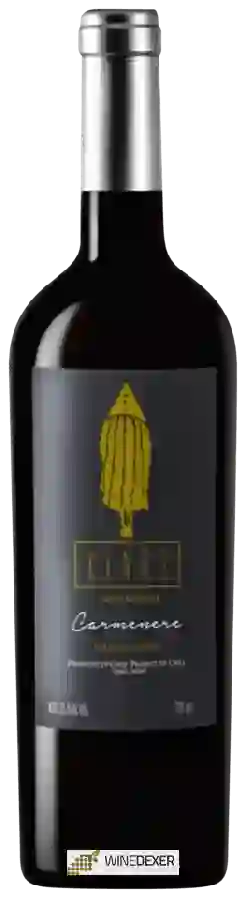
Winery KenosCarmenère Gran Reserva
 Red wine



In the mouth this red wine is a powerful with a nice freshness.
This wine generally goes well with poultry, beef or lamb.

Taste structure of the Carmenère Gran Reserva from the Winery Kenos
Light | Bold | |
Smooth | Tannic | |
Dry | Sweet | |
Soft | Acidic |
In the mouth the Carmenère Gran Reserva of Winery Kenos in the region of Central Valley is a powerful with a nice freshness.


Food and wine pairings with Carmenère Gran Reserva
Pairings that work perfectly with Carmenère Gran Reserva



Original food and wine pairings with Carmenère Gran Reserva

The Carmenère Gran Reserva of Winery Kenos matches generally quite well with dishes of beef, pasta or lamb such as recipes of baeckeoffe, fettuccine with cream and cheese or daniel's algerian couscous.
Details and technical informations about Winery Kenos's Carmenère Gran Reserva.
Discover the grape variety: Carmenère
Velvety, deep reds with a dark robe and round tannins, showing aromas of blackberry, plum, ripe red pepper, dark chocolate, coffee and gentle spice. Warm, supple finish. Absolute star of Chile (Colchagua, Cachapoal, Maipo) where it was rediscovered in 1994, long confused with Merlot. A historic Bordeaux variety that nearly vanished after phylloxera, a cross of Cabernet Franc × Gros Cabernet.
Last vintages of this wine
The best vintages of Carmenère Gran Reserva from Winery Kenos are 2015, 0, 2014
Informations about the Winery Kenos
The Winery Kenos is one of of the world's greatest estates. It offers 26 wines for sale in the of Curico Valley to come and discover on site or to buy online.

The wine region of Curico Valley
Productive heart of central Chile, good value for money. Sauvignon Blanc as star white: lively and accessible with signature notes of citrus, grapefruit, fresh grass and tropical fruit, fresh finish. Balanced Chardonnay (apple, honey). Cabernet Sauvignon as dominant red: fleshy and fruity (blackcurrant, plum), round tannins.
The wine region of Central Valley
Heart of modern Chilean wine: structured, sunny reds, dense, blackcurranty Cabernet Sauvignon from Maipo (Chilean cradle of the grape), signature Carménère with notes of ripe pepper, black fruit and sweet spices from Colchagua, supple Merlot and deep Syrah. Round Chardonnay whites and lively, sharp Sauvignon. Mediterranean climate, 400 km between Andes and Pacific. Star sub-regions: Maipo, Cachapoal, Colchagua, Curicó, Maule.
The word of the wine: Baco 22A
A white grape variety resulting from the hybridization of the folle blanche and the noah. It is the only hybrid to remain authorized in a French appellation vineyard, that of Armagnac, where it thrives in particular on the tawny sands of Bas-Armagnac. When distilled, its wine produces round, smooth and aromatic eaux-de-vie with hints of ripe fruit.


