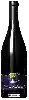
Winery KarmèreJufie Ann Barbera
 Red wine


This wine generally goes well with pork, poultry or mild and soft cheese.
Wine flavors and olphactive analysis

Food and wine pairings with Jufie Ann Barbera
Pairings that work perfectly with Jufie Ann Barbera



Original food and wine pairings with Jufie Ann Barbera

The Jufie Ann Barbera of Winery Karmère matches generally quite well with dishes of pork, spicy food or poultry such as recipes of blue cord, chicken colombo or chicken curry and onions.
Details and technical informations about Winery Karmère's Jufie Ann Barbera.
Discover the grape variety: Chenin
Chenin Blanc is a grape variety that originated in France (Loire Valley). It produces a variety of grape specially used for the elaboration of wine. It is rare to find this grape to eat on our tables. This variety of grape is characterized by bunches of medium size, and grapes of medium caliber. Chenin Blanc can be found in many vineyards: Loire Valley, South West, Languedoc & Roussillon, Cognac, Bordeaux, Armagnac, Burgundy, Rhone Valley, Beaujolais, Provence & Corsica, Savoie & Bugey.
Last vintages of this wine
The best vintages of Jufie Ann Barbera from Winery Karmère are 0
Informations about the Winery Karmère
The Winery Karmère is one of of the world's greatest estates. It offers 23 wines for sale in the of California Shenandoah Valley to come and discover on site or to buy online.

The wine region of California Shenandoah Valley
The wine region of California Shenandoah Valley is located in the region of Sierra Foothills of California of United States. Wineries and vineyards like the Domaine C. G. di Arie or the Domaine Easton produce mainly wines red, white and pink.
The wine region of California
California is the largest and most important wine region in the United States. It represents the southern two-thirds (850 miles or 1,370 kilometers) of the country's west coast. (Oregon and Washington make up the rest. ) The state also spans nearly 10 degrees of latitude.
The word of the wine: Sorting
Action which consists in removing the bad grains, not ripe or affected by the rot. We often use vibrating sorting tables which, by shaking, make the impurities fall to the ground. In the case of sweet wines, we speak of harvesting by successive selections, in several passages, to select the very ripe grapes each time.