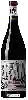
Winery KaapzichtCape Winemakers Guild Rouge
 Red wine
This wine generally goes well with
Details and technical informations about Winery Kaapzicht's Cape Winemakers Guild Rouge.
Discover the grape variety: Couderc 4401
An interspecific cross made in 1884 by Georges Couderc (1850-1928) between chasselas rose and rupestris. This direct-producing hybrid was multiplied much more in the south-west of France and in the Loire Valley, and in some cases was even used as rootstock. François Baco (1865-1947) and Vincent Malègue (1830-1915) also used it as a progenitor. - Synonymy: red bird, tank, Terray hybrid, malafosse, oazo rukh, sakhotin (for all the grape variety synonyms, click here!). - Description: small to medium-sized bunches, cylindrical-conical, winged, more or less compact, sometimes with small green berries, medium-sized stalks remaining green when ripe; small, spherical berries, beautiful bluish-black skin, very pruinose, pulpy, with coloured juice.
Informations about the Winery Kaapzicht
The Winery Kaapzicht is one of of the world's great estates. It offers 61 wines for sale in the of Stellenbosch to come and discover on site or to buy online.

The wine region of Stellenbosch
The wine region of Stellenbosch is located in the region of Coastal Region of Western Cape of South Africa. We currently count 582 estates and châteaux in the of Stellenbosch, producing 3443 different wines in conventional, organic and biodynamic agriculture. The wines of Stellenbosch go well with generally quite well with dishes .
The wine region of Western Cape
The Western Cape is home to the vast majority of the South African wine industry, and the country's two most famous wine regions, Stellenbosch and Paarl. The city of Cape Town serves as the epicenter of the Cape Winelands, a mountainous, biologically diverse area in the south-western corner of the African continent. A wide variety of wines are produced here. Wines from the Shiraz and Pinotage">Pinotage grape varieties can be fresh and juicy or Full-bodied and gutsy.
The word of the wine: Interknot
Botanical term for the interval between two nodes or between two leaf insertions on a branch (see merithallus).