The Winery João Pires of Península de Setúbal
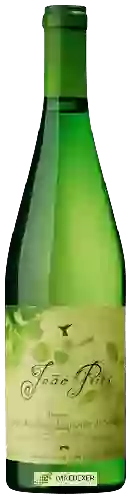
The Winery João Pires is one of the best wineries to follow in Península de Setúbal.. It offers 4 wines for sale in of Península de Setúbal to come and discover on site or to buy online.
Looking for the best Winery João Pires wines in Península de Setúbal among all the wines in the region? Check out our tops of the best red, white or effervescent Winery João Pires wines. Also find some food and wine pairings that may be suitable with the wines from this area. Learn more about the region and the Winery João Pires wines with technical and enological descriptions.
How Winery João Pires wines pair with each other generally quite well with dishes of pasta, pork or shellfish such as recipes of tagliatelle with fresh salmon, tomatoes stuffed with sausage meat or my chef's pot.
On the nose the white wine of Winery João Pires. often reveals types of flavors of pineapple, citrus or apples and sometimes also flavors of peach, green apple or minerality. In the mouth the white wine of Winery João Pires. is a .
Setúbal Peninsula (also known as Península de Setúbal) is the Portuguese wine region immediately southeast of Lisbon, across the Tejo estuary. The Terroir in the area ranges from sandy coastal plains to the craggy, limestone-rich Serra Arribida hills. The area is known for its Dry red wines made from Castelão, and for its fortified wines and Sweet Moscatel de Setúbal.
The wines produced here are made under three titles: two DOCs, Palmela and Setúbal, and one IGP.
The IGP (formerly VR, or Vinho Regional) has been officially named "Peninsula de Setúbal" since 2008, but before that was known as VR Terras do Sado, meaning "lands of the river Sado". The Sado is one of Portugal's major rivers, and flows North from the Caldeirão hills to Setúbal city, on the southern edge of the eponymous peninsula.
The Setúbal Peninsula's two DOC titles cover a similar area, but encompass different styles of wine. Palmela covers both the sandy plains and the hills, while Setúbal covers the land on the hills.
The Castelão Grape which comprises the majority of Palmela wines performs admirably on the dry, sandy soils, which is one of the few terroirs in Portugal where it can reach Full ripeness. Other Portuguese and international varieties like Cabernet Sauvignon, Touriga Nacional and Syrah are planted on the slopes hills.
The other DOC covering the peninsula, Setúbal, is for sweet fortified wines made from Muscat of Alexandria, here known as Moscatel de Setúbal. These are made slightly differently from Portugal's most famous fortified wine, Port, in that leftover grape skins are added to the wine after Mutage.
How Winery João Pires wines pair with each other generally quite well with dishes of sweet desserts or blue cheese such as recipes of apple cake or juliette's pizza.
On the nose the natural sweet wine of Winery João Pires. often reveals types of flavors of dried fruit.
Jurançon white is a grape variety that originated in France (South West). It produces a variety of grape specially used for wine making. It is rare to find this grape to eat on our tables. This variety of grape is characterized by small bunches, and grapes of medium size. The white Jurançon can be found cultivated in these vineyards: South-West, Cognac, Bordeaux, Provence & Corsica, Languedoc & Roussillon, Rhone Valley.
How Winery João Pires wines pair with each other generally quite well with dishes of beef, pasta or veal such as recipes of pork tongue with bacon and onions, pasta shells or slow-cooked veal roast.
In the mouth the red wine of Winery João Pires. is a powerful.
A very rare white grape variety that can be found in the blends of the Palette appellation (Provence).
Planning a wine route in the of Península de Setúbal? Here are the wineries to visit and the winemakers to meet during your trip in search of wines similar to Winery João Pires.
Ravat blanc blanc is a grape variety that originated in France. It is a variety resulting from a cross of the same species (interspecific hybridization). It produces a variety of grape specially used for wine making. It is rare to find this grape to eat on our tables. Ravat blanc blanc is grown in the following vineyards: Rhône Valley, Loire Valley, Savoie & Bugey, Beaujolais, Languedoc & Roussillon, Provence & Corsica.