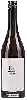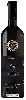
Winery Jeruzalem OrmožSauvignon
 White wine



This wine generally goes well with vegetarian, rich fish (salmon, tuna etc) or shellfish.
The Sauvignon of the Winery Jeruzalem Ormož is in the top 80 of wines of Podravje.
Wine flavors and olphactive analysis


On the nose the Sauvignon of Winery Jeruzalem Ormož in the region of Podravje often reveals types of flavors of vegetal, tree fruit or citrus fruit and sometimes also flavors of floral, tropical fruit.
Food and wine pairings with Sauvignon
Pairings that work perfectly with Sauvignon



Original food and wine pairings with Sauvignon
The Sauvignon of Winery Jeruzalem Ormož matches generally quite well with dishes of rich fish (salmon, tuna etc), shellfish or vegetarian such as recipes of salmon with honey and soy, mussels with chicken or ham and comté quiche.
Details and technical informations about Winery Jeruzalem Ormož's Sauvignon.
Discover the grape variety: Cabernet-Jura
An interspecific cross between Cabernet Sauvignon and a still unknown relative, obtained in 1991 by Valentin Blatter of Soyhières (Switzerland). Cabernet-Jura can be found in Switzerland, Belgium, the Netherlands, Germany, etc., but is still little known in France.
Last vintages of this wine
The best vintages of Sauvignon from Winery Jeruzalem Ormož are 2019, 2017, 2016, 2012 and 0.
Informations about the Winery Jeruzalem Ormož
The Winery Jeruzalem Ormož is one of of the world's greatest estates. It offers 33 wines for sale in the of Podravje to come and discover on site or to buy online.

The wine region of Podravje
Podravje is Slovenia's largest and most productive wine region. It is located towards the eastern half of the country, and Centers around the key towns of Maribor and Ormoz. With roughly 11,000 hectares (30,000 acres) of Vineyard">Vineyard, Podravje has twice as much land under vine as its western neighbor, Posavje. More than just a local center of activity, Maribor has Long been a wine center for this region of Europe as a whole.
The word of the wine: Residual sugars
Sugars not transformed into alcohol and naturally present in the wine. The perception of residual sugars is conditioned by the acidity of the wine. The more acidic the wine is, the less sweet it will seem, given the same amount of sugar.