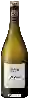
Winery Jean Claude MasChardonnay Limoux
 White wine



In the mouth this white wine is a powerful.
This wine generally goes well with vegetarian, poultry or lean fish.

Taste structure of the Chardonnay Limoux from the Winery Jean Claude Mas
Light | Bold | |
Dry | Sweet | |
Soft | Acidic |
In the mouth the Chardonnay Limoux of Winery Jean Claude Mas in the region of Languedoc-Roussillon is a powerful.
Wine flavors and olphactive analysis






On the nose the Chardonnay Limoux of Winery Jean Claude Mas in the region of Languedoc-Roussillon often reveals types of flavors of cream, oaky or citrus and sometimes also flavors of peach, butter or vanilla.
Food and wine pairings with Chardonnay Limoux
Pairings that work perfectly with Chardonnay Limoux



Original food and wine pairings with Chardonnay Limoux


The Chardonnay Limoux of Winery Jean Claude Mas matches generally quite well with dishes of pasta, vegetarian or poultry such as recipes of pasta with arrabiata, zucchini quiche or basque piperade.
Details and technical informations about Winery Jean Claude Mas's Chardonnay Limoux.
Discover the grape variety: Chardonnay
Whites with many faces: mineral and taut at Chablis (lemon, green apple, flint), opulent and buttery at Meursault and Puligny-Montrachet (hazelnut, brioche, yellow fruits), tense and chalky in Champagne (Blanc de Blancs). Also vinified sparkling and widely exported (Sonoma, Margaret River, Casablanca). A Burgundian variety, a cross of Pinot Noir × Gouais Blanc, half-sibling of Aligoté.
Last vintages of this wine
The best vintages of Chardonnay Limoux from Winery Jean Claude Mas are 2013, 2016, 2014, 2015 and 2017.
Informations about the Winery Jean Claude Mas
The Winery Jean Claude Mas is one of of the world's great estates. It offers 148 wines for sale in the of Limoux to come and discover on site or to buy online.

The wine region of Limoux
Languedoc AOC south of Carcassonne, cradle of French sparkling wine (ancestral method born in 1531, predating Champagne). Blanquette de Limoux from Mauzac (min. 90%) is the signature with notes of green apple, ripe pear, white flowers and a honeyed touch typical of the grape, tender palate. Finer Crémant de Limoux on Chardonnay and Chenin (citrus, brioche).
The wine region of Languedoc-Roussillon
Largest single French vineyard, dominated by sunny, generous reds. Spicy Syrah, candied Grenache (ripe fruit, garrigue), structured Carignan, deep Mourvèdre, supple Cinsault. Stars: structured Corbières, Minervois, Faugères, Saint-Chinian; round Côtes-du-Roussillon. Legendary vins doux naturels: Banyuls and Maury (fortified Grenache) with notes of cocoa, fig, prune.
The word of the wine: Right bank
In Bordeaux, it refers to the vineyards located on the right bank of the Gironde and Dordogne rivers, where the Merlot grape variety is dominant. These are the appellations of Saint-Emilion, Pomerol, Fronsac, etc.