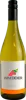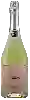
Winery JaillanceCrémant de Bourgogne Brut
 Sparkling wine



This wine is a blend of 4 varietals which are the Aligoté, the Chardonnay, the Pinot noir and the Gamay noir.
This wine generally goes well with pork, vegetarian or poultry.
The Crémant de Bourgogne Brut of the Winery Jaillance is in the top 30 of wines of Crémant de Bourgogne.
Food and wine pairings with Crémant de Bourgogne Brut
Pairings that work perfectly with Crémant de Bourgogne Brut



Original food and wine pairings with Crémant de Bourgogne Brut



The Crémant de Bourgogne Brut of Winery Jaillance matches generally quite well with dishes of beef, veal or pork such as recipes of sloth pork loin, veal tagine with peas or stuffed tomatoes with thermomix.
Details and technical informations about Winery Jaillance's Crémant de Bourgogne Brut.
Discover the grape variety: Aligoté
Aligoté is an ancient Burgundian grape variety (it has different names depending on the region in which it is grown: griset blanc in Beaune, giboudot blanc in the Chalonnais or troyen blanc in the Aube), mainly used in the production of Bourgogne-Aligoté, Bouzeron and Crémant-de-Bourgogne.aligoté is a medium-fine white grape variety, quite productive, which gives clear, acidic, fresh and light white wines. An anecdote often says that it was a member of the clergy named Kir who gave it its letters of nobility by adding it to blackcurrant cream to prepare an aperitif.produced on more than 1,600 hectares in Burgundy, aligoté has also been exported. It is also cultivated in Eastern Europe (Ukraine, Romania), California, Canada and Chile, representing more than 20,000 hectares in the world.
Last vintages of this wine
The best vintages of Crémant de Bourgogne Brut from Winery Jaillance are N.V.
Informations about the Winery Jaillance
The Winery Jaillance is one of of the world's great estates. It offers 71 wines for sale in the of Crémant de Bourgogne to come and discover on site or to buy online.

The wine region of Crémant de Bourgogne
Recognized in 1975, the appellation crémant-de-bourgogne replaced the Sparkling wines whose quality was not very homogeneous. Its geographical area, very vast, covers more than 300 communes, of Châtillonnais, with the borders of Champagne auboise, with Beaujolais included. The AOC imposes conditions of harvest and elaboration as strict as those of the Champagne region and copied on this one, the difference residing in the duration of Maturation on lees, which is of nine months minimum, against twelve for the champagne. The Grape varieties used also bring Crémant-de-Bourgogne closer to its illustrious Champagne model, for although all the varieties of the region can be used, Pinot Noir and Chardonnay are favoured.
The wine region of Burgundy
Bourgogne is the catch-all regional appellation title of the Burgundy wine region in eastern France ("Bourgogne" is the French name for Burgundy). Burgundy has a Complex and comprehensive appellation system; counting Premier Cru and Grand Cru titles, the region has over 700 appellation titles for its wines. Thus, Burgundy wines often come from one Vineyard (or several separate vineyards) without an appellation title specific to the region, Village or even vineyard. A standard Burgundy wine may be made from grapes grown in one or more of Burgundy's 300 communes.
The word of the wine: Phylloxera
Aphid that came from America and ravaged European vineyards at the end of the 19th century. It lives on the roots of the vine, from which it pumps the sap. The only vines capable of resisting it had to be imported from the United States, and then grafted onto their root system the wood of traditional French grape varieties. Today, grafted vines are always planted.