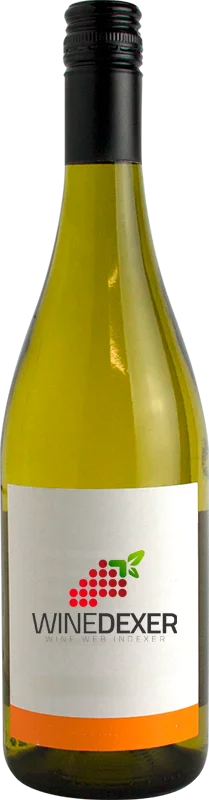
Winery Jacques CharmetantL’or Beaujolais Blanc
 White wine
In the mouth this white wine is a powerful.
This wine generally goes well with pork, vegetarian or poultry.

Taste structure of the L’or Beaujolais Blanc from the Winery Jacques Charmetant
Light | Bold | |
Dry | Sweet | |
Soft | Acidic |
In the mouth the L’or Beaujolais Blanc of Winery Jacques Charmetant in the region of Beaujolais is a powerful.
Food and wine pairings with L’or Beaujolais Blanc
Pairings that work perfectly with L’or Beaujolais Blanc



Original food and wine pairings with L’or Beaujolais Blanc


The L’or Beaujolais Blanc of Winery Jacques Charmetant matches generally quite well with dishes of pork, vegetarian or poultry such as recipes of pasta carbonara, magic cake cheese quiche or pan bagnat.
Details and technical informations about Winery Jacques Charmetant's L’or Beaujolais Blanc.
Discover the grape variety: Chardonnay
Whites with many faces: mineral and taut at Chablis (lemon, green apple, flint), opulent and buttery at Meursault and Puligny-Montrachet (hazelnut, brioche, yellow fruits), tense and chalky in Champagne (Blanc de Blancs). Also vinified sparkling and widely exported (Sonoma, Margaret River, Casablanca). A Burgundian variety, a cross of Pinot Noir × Gouais Blanc, half-sibling of Aligoté.
Informations about the Winery Jacques Charmetant
The Winery Jacques Charmetant is one of of the world's great estates. It offers 11 wines for sale in the of Beaujolais to come and discover on site or to buy online.

The wine region of Beaujolais
Kingdom of Gamay (98% of the vineyard): fruity, accessible reds with signature notes of cherry, raspberry, banana (carbonic maceration), violet and sweet spices, supple tannins and juicy acidity. From festive Beaujolais Nouveau (3rd Thursday of November) to the 10 more structured, age-worthy Crus: deep earthy Morgon, sturdy Moulin-à-Vent, floral Fleurie, crunchy Brouilly. Some lively Chardonnay. 12,000 ha south of Burgundy, granitic soils.
The word of the wine: Terroir
Strictly speaking, the notion of terroir corresponds to the geological characteristics of a vineyard. However, when we talk about terroir, we take into account the soil, the climate (even the microclimate), the flora, the fauna, and the human factor that characterizes the practices that make up the art of the craft.








