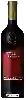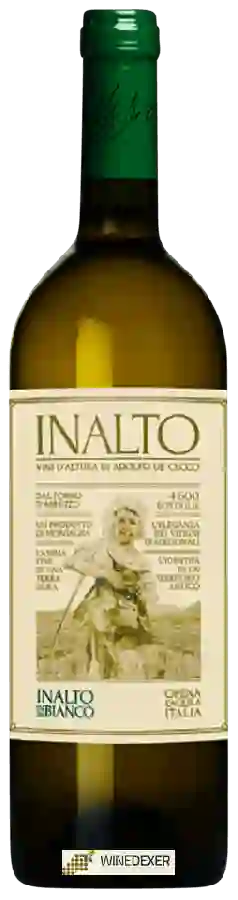
Winery InaltoBianco
 White wine


In the mouth this white wine is a with a nice freshness.
This wine generally goes well with vegetarian, appetizers and snacks or lean fish.

Taste structure of the Bianco from the Winery Inalto
Light | Bold | |
Dry | Sweet | |
Soft | Acidic |
In the mouth the Bianco of Winery Inalto in the region of Abruzzo is a with a nice freshness.
Food and wine pairings with Bianco
Pairings that work perfectly with Bianco



Original food and wine pairings with Bianco


The Bianco of Winery Inalto matches generally quite well with dishes of pasta, vegetarian or appetizers and snacks such as recipes of pastasciutta (corsica), zucchini quiche or chorizo puff pastry.
Details and technical informations about Winery Inalto's Bianco.
Discover the grape variety: Torrontés riojano
Very aromatic, perfumed dry whites with a pale golden robe, a supple palate and preserved acidity of explosive signature aromas of rose, jasmine, orange blossom, geranium, white peach, apricot, citrus and muscat notes. An exuberant floral profile. Absolute star of Argentine whites, grown on the high plateaus of Cafayate (Salta), La Rioja and Catamarca at Andean altitude. Natural Argentine cross (muscat of Alexandria × criolla chica), Andean identity signature.
Last vintages of this wine

The best vintages of Bianco from Winery Inalto are 2017, 0
Informations about the Winery Inalto
The Winery Inalto is one of of the world's greatest estates. It offers 6 wines for sale in the of Abruzzo to come and discover on site or to buy online.

The wine region of Abruzzo
Accessible, identity-driven Italian duo. Montepulciano d'Abruzzo as red: deep colour, intense aromas of black cherry, ripe plum, sweet spices and balsamic notes, round tannins and a gourmet finish, from everyday to age-worthy Riserva. Cerasuolo d'Abruzzo DOCG as a fleshy, fruity rosé (strawberry, pomegranate). Trebbiano d'Abruzzo as a straight white with citrus and white flowers, sublimated by a few cult producers (Valentini).
The word of the wine: Bâtonnage
A very old technique that has come back into fashion in modern oenology, which consists of shaking the white wine in the barrels at the end of fermentation, or after fermentation, with a stick or a flail, in order to suspend the fine lees composed of yeasts at the end of their activity. This process is sometimes used for red wines.