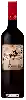
Winery IbanesasCasa Torada Selection Cabernet Sauvignon
 Red wine



In the mouth this red wine is a powerful with a nice balance between acidity and tannins.
This wine generally goes well with poultry, beef or lamb.
Taste structure of the Casa Torada Selection Cabernet Sauvignon from the Winery Ibanesas
Light | Bold | |
Smooth | Tannic | |
Dry | Sweet | |
Soft | Acidic |
In the mouth the Casa Torada Selection Cabernet Sauvignon of Winery Ibanesas in the region of Valence is a powerful with a nice balance between acidity and tannins.
Food and wine pairings with Casa Torada Selection Cabernet Sauvignon
Pairings that work perfectly with Casa Torada Selection Cabernet Sauvignon



Original food and wine pairings with Casa Torada Selection Cabernet Sauvignon
The Casa Torada Selection Cabernet Sauvignon of Winery Ibanesas matches generally quite well with dishes of beef, lamb or poultry such as recipes of beer goulash, lamb tagine with broad beans or home-made coq au vin.
Details and technical informations about Winery Ibanesas's Casa Torada Selection Cabernet Sauvignon.
Discover the grape variety: Cabernet-Sauvignon
Cabernet-Sauvignon noir is a grape variety that originated in France (Bordeaux). It produces a variety of grape specially used for wine making. It is rare to find this grape to eat on our tables. This variety of grape is characterized by small bunches, and small grapes. Cabernet-Sauvignon noir can be found in many vineyards: South-West, Loire Valley, Languedoc & Roussillon, Cognac, Bordeaux, Armagnac, Rhone Valley, Provence & Corsica, Savoie & Bugey, Beaujolais.
Last vintages of this wine
The best vintages of Casa Torada Selection Cabernet Sauvignon from Winery Ibanesas are 2011, 0, 2010
Informations about the Winery Ibanesas
The Winery Ibanesas is one of of the world's greatest estates. It offers 1 wines for sale in the of Valence to come and discover on site or to buy online.

The wine region of Valence
Valencia is a province in the centre of Spain's sunny east coast, perhaps better known for its oranges (and paella) than its wine. The administrative Center of Valencia is the city of the same name, the third largest in Spain and the largest port on the Mediterranean. Archaeological evidence suggests that wine making in Valencia dates back more than a thousand years, but the region has never been particularly prominent on the world wine map. In modern times, Valencia's wine production has focused on quantity rather than quality, although this is gradually changing.
The word of the wine: Friand
A light, easy-drinking wine with an immediate and fresh fruitiness.