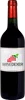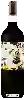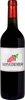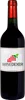
Winery Humus WinesPalheto
 Red wine



In the mouth this red wine is a powerful.
This wine generally goes well with poultry, beef or veal.
Taste structure of the Palheto from the Winery Humus Wines
Light | Bold | |
Smooth | Tannic | |
Dry | Sweet | |
Soft | Acidic |
In the mouth the Palheto of Winery Humus Wines in the region of Lisboa is a powerful.
Food and wine pairings with Palheto
Pairings that work perfectly with Palheto



Original food and wine pairings with Palheto

The Palheto of Winery Humus Wines matches generally quite well with dishes of beef, pasta or veal such as recipes of veal shank with mushrooms, succulent and easy to make beef lasagna or potjevlesch (northern france).
Details and technical informations about Winery Humus Wines's Palheto.
Discover the grape variety: Touriga nacional
Most certainly Portuguese, not to be confused with the Touriga Franca also of the same origin. In Portugal, where it is widely cultivated, it is used to produce, among other things, the famous red Porto. It is also found in Uzbekistan, Australia, South Africa, Cyprus, Spain, etc... very little known in France, although it is listed in the Official Catalogue of A1 vines.
Last vintages of this wine
The best vintages of Palheto from Winery Humus Wines are 0, 2019
Informations about the Winery Humus Wines
The Winery Humus Wines is one of of the world's greatest estates. It offers 14 wines for sale in the of Lisboa to come and discover on site or to buy online.

The wine region of Lisboa
Lisboa (formerly Estremadura) is a prolific wine region located at the Center of Portugal's Atlantic coast. Despite being one of the country's most productive winemaking areas, its name remains relatively obscure in wine terms, as its wines have traditionally been labeled with the names of the local sub-regions, which include Alenquer, Bucelas and Colares. The region is also home to Portugal's capital, Lisbon. The region fell under the VR (Vinho Regional) classification until 2008, when the category was renamed IGP (Indicaciones Geográficas Protegidas) to bring it into line with the rest of Europe.
The word of the wine: Lemonade maker
Corkscrew of the wine waiter equipped with a small blade allowing to cut the capsule, a worm and a system of rack allowing to extract the cork easily.