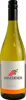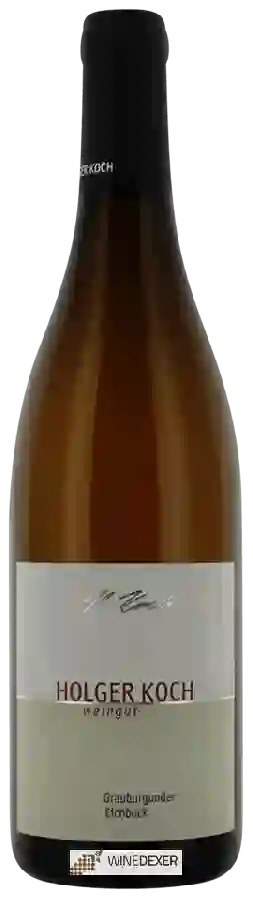
Weingut Holger KochGrauburgunder Eichbuck
 White wine



In the mouth this white wine is a .
This wine generally goes well with pork, cured meat or mushrooms.

Taste structure of the Grauburgunder Eichbuck from the Weingut Holger Koch
Light | Bold | |
Dry | Sweet | |
Soft | Acidic |
In the mouth the Grauburgunder Eichbuck of Weingut Holger Koch in the region of Baden is a .
Food and wine pairings with Grauburgunder Eichbuck
Pairings that work perfectly with Grauburgunder Eichbuck


Original food and wine pairings with Grauburgunder Eichbuck

The Grauburgunder Eichbuck of Weingut Holger Koch matches generally quite well with dishes of pork, spicy food or mushrooms such as recipes of italian pasta, chicken tagine with lemon confit (marrakech style) or rabbit legs with mushrooms.
Details and technical informations about Weingut Holger Koch's Grauburgunder Eichbuck.
Discover the grape variety: Pinenc
Structured, deeply coloured reds with a dark ruby robe, firm tannins and a dense palate, with signature aromas of black fruits (blackberry, blackcurrant), red pepper (hallmark), spices and herbaceous notes. Fine ageing potential, defining the identity of Béarn and Aveyron. Essential component of Madiran AOC and Pacherenc du Vic-Bilh AOC. Synonym of Fer Servadou in Madiran, also called Braucol in Gaillac and Mansois in Marcillac. South-West French variety.
Last vintages of this wine
The best vintages of Grauburgunder Eichbuck from Weingut Holger Koch are 2016, 2017, 0
Informations about the Weingut Holger Koch
The Weingut Holger Koch is one of of the world's great estates. It offers 46 wines for sale in the of Baden to come and discover on site or to buy online.

The wine region of Baden
German capital of Pinot Noir (Spätburgunder): silky, fine reds with notes of red fruits, cherry, undergrowth and sweet spices, melted tannins. Round Grauburgunder (Pinot Gris), lively Weissburgunder, supple Müller-Thurgau, mineral Riesling. Germany's 3rd region (15,000 ha) in Baden-Württemberg facing Alsace, one of the country's warmest climates, volcanic soils at the Kaiserstuhl. Cradle of modern great German reds, elegant and fine.
The word of the wine: Silky
Said of a caressing wine with extremely fine tannins.