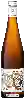
Winery Hermann Baßler GbRRiesling Classic
 White wine
In the mouth this white wine is a with a nice freshness.
This wine generally goes well with pork, poultry or shellfish.

Taste structure of the Riesling Classic from the Winery Hermann Baßler GbR
Light | Bold | |
Dry | Sweet | |
Soft | Acidic |
In the mouth the Riesling Classic of Winery Hermann Baßler GbR in the region of Pfalz is a with a nice freshness.
Food and wine pairings with Riesling Classic
Pairings that work perfectly with Riesling Classic



Original food and wine pairings with Riesling Classic


The Riesling Classic of Winery Hermann Baßler GbR matches generally quite well with dishes of pork, shellfish or spicy food such as recipes of sauté of veal with olives (corsica), chicken maffé (africa) or red wine fondue.
Details and technical informations about Winery Hermann Baßler GbR's Riesling Classic.
Discover the grape variety: Riesling
Crystalline, taut whites with vibrant acidity and aromas of citrus, green apple, white flowers, vineyard peach and mineral/petrol notes with age. Made as dry (Trocken, Alsace), off-dry (Kabinett, Spätlese) and sweet (Auslese, Beerenauslese, Trockenbeerenauslese, late harvest). Star of the Moselle, Rheingau, Alsace AOC and Wachau. Also exported to Clare Valley and Finger Lakes.
Informations about the Winery Hermann Baßler GbR
The Winery Hermann Baßler GbR is one of of the world's greatest estates. It offers 13 wines for sale in the of Pfalz to come and discover on site or to buy online.

The wine region of Pfalz
Fleshy, dry, fruity Riesling is the region's signature: yellow peach, apricot, ripe citrus, lovely mineral tension. Germany's largest red-wine area (40%), with silky Spätburgunder showing red fruit and spice, darker structured Dornfelder, supple Portugieser. Some rounded Pinot Blanc and Pinot Gris. A 23,640 ha vineyard along the Haardt, among Germany's warmest (>2,000 h of sun).
The word of the wine: Final
A more or less lasting impression that is felt in the mouth once the wine has been swallowed (or spat out in the case of a professional tasting). The finish can be short or persistent.