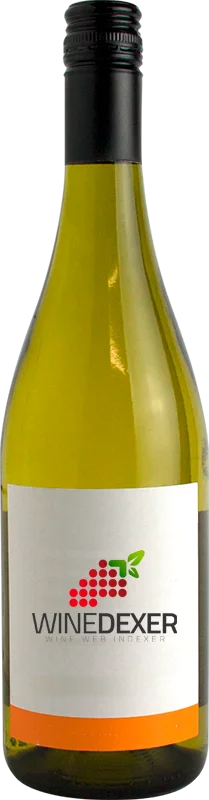
Winery HartRoussanne
 White wine



This wine generally goes well with
Details and technical informations about Winery Hart's Roussanne.
Discover the grape variety: Roussanne
Roussane is a white grape variety, planted on an area of more than 700 ha. Originally from Montélimar, it is also found in Savoie, Languedoc and Roussillon, and grows very well in calcareous, poor, stony soil. It prefers to be pruned short. Roussane is also called fromenteau, barbin or bergeron. The young leaves are bubbled with fine down. When adult, they become thicker. It flowers in June and matures in mid-September. The grapes are cylindrical in shape, the berries are small and turn red when ripe, and the wine produced from pure Roussane is of extraordinary quality. It has a delicate aroma reminiscent of coffee, honeysuckle, iris and peony. The taste of this wine improves with age. It is part of the blend of the appellations Vin-de-Savoie, Côtes-du-Vallée du Rhône or Châteauneuf-du-Pape.
Last vintages of this wine
The best vintages of Roussanne from Winery Hart are 0
Informations about the Winery Hart
The Winery Hart is one of of the world's great estates. It offers 39 wines for sale in the of Temecula Valley to come and discover on site or to buy online.

The wine region of Temecula Valley
The wine region of Temecula Valley is located in the region of South Coast of California of United States. We currently count 60 estates and châteaux in the of Temecula Valley, producing 715 different wines in conventional, organic and biodynamic agriculture. The wines of Temecula Valley go well with generally quite well with dishes .
The wine region of California
California is the largest and most important wine region in the United States. It represents the southern two-thirds (850 miles or 1,370 kilometers) of the country's west coast. (Oregon and Washington make up the rest. ) The state also spans nearly 10 degrees of latitude.
The word of the wine: Green harvest or green harvesting
The practice of removing excess bunches of grapes from certain vines, usually in July, but sometimes later. This is often necessary, but not always a good thing, as the remaining grapes tend to gain weight.