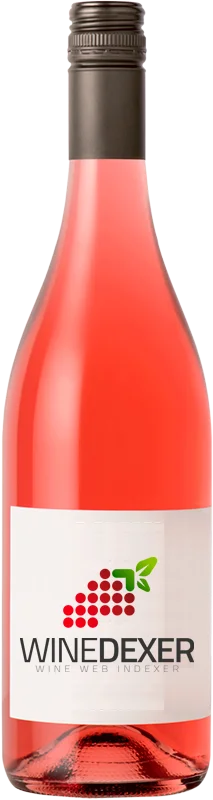
Winery Happy CountryRosé Syrah
 Pink wine



This wine generally goes well with beef, lamb or mature and hard cheese.
Food and wine pairings with Rosé Syrah
Pairings that work perfectly with Rosé Syrah



Original food and wine pairings with Rosé Syrah

The Rosé Syrah of Winery Happy Country matches generally quite well with dishes of beef, lamb or spicy food such as recipes of mexican beef tacos, lamb epigram in spicy sauce or lentil soup with carrots and coconut milk.
Details and technical informations about Winery Happy Country's Rosé Syrah.
Discover the grape variety: Scheurebe
German grape variety obtained in 1916 by Georg Shere (1879/1949). It was given until then as coming from a cross between Riesling and Sylvaner, but genetic tests have shown that its father is the Bouquettraube (Bukettrebe), and it is closely related to the Kerner. The Scheurebe can be found in Austria, Germany, Belgium, Switzerland, the Netherlands, Italy, Slovenia, Great Britain, the United States (California, Virginia, ...), Canada (Ontario, British Columbia, ...), ... practically unknown in France.
Last vintages of this wine
The best vintages of Rosé Syrah from Winery Happy Country are 2017, 2015, 2016, 0
Informations about the Winery Happy Country
The Winery Happy Country is one of of the world's greatest estates. It offers 8 wines for sale in the of Central Valley to come and discover on site or to buy online.

The wine region of Central Valley
The Central Valley (El Valle Central) of Chile is one of the most important wine-producing areas in South America in terms of Volume. It is also one of the largest wine regions, stretching from the Maipo Valley (just south of Santiago) to the southern end of the Maule Valley. This is a distance of almost 250 miles (400km) and covers a number of Climate types. The Central Valley wine region is easily (and often) confused with the geological Central Valley, which runs north–south for more than 620 miles (1000km) between the Pacific Coastal Ranges and the lower Andes.
The word of the wine: Primeur
Said of wines from the last vintage and, by extension, wines of the year, fruity and easy-drinking, put on sale on the third Thursday in November. The AOC regulations specify that a wine is said to be primeur if it is bottled before the spring, and nouveau if it is bottled before the following harvest. Beaujolais Nouveau is therefore a vin primeur.