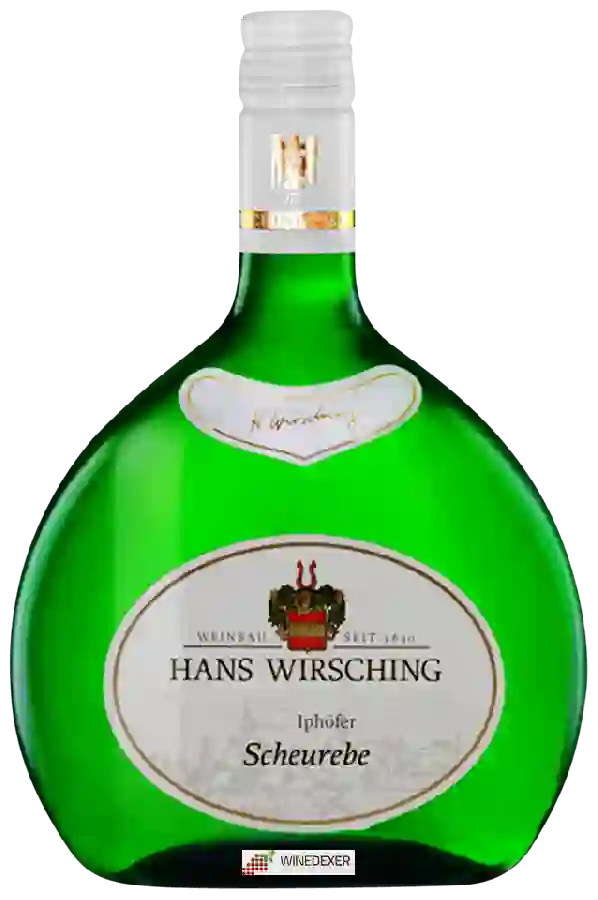
Winery Hans WirschingIphöfer Scheurebe
 White wine



This wine generally goes well with

Wine flavors and olphactive analysis



On the nose the Iphöfer Scheurebe of Winery Hans Wirsching in the region of Franken often reveals types of flavors of earth, tree fruit or citrus fruit and sometimes also flavors of floral, tropical fruit.
Details and technical informations about Winery Hans Wirsching's Iphöfer Scheurebe.
Discover the grape variety: Scheurebe
Aromatic, structured whites with lively acidity and a round mouth, featuring intense aromas of pink grapefruit, blackcurrant, passion fruit, white flowers and muscat notes. Made as aromatic dry wines (Trocken), off-dry (Kabinett, Spätlese) and especially sumptuous botrytised sweet wines (Auslese, Beerenauslese, Trockenbeerenauslese). Grown in Germany (Rheinhessen, Palatinate) and Austria. Created in 1916 by Georg Scheu in Alzey, a Riesling × Bukettrebe cross.
Last vintages of this wine
The best vintages of Iphöfer Scheurebe from Winery Hans Wirsching are 2019, 2016, 2017, 0
Informations about the Winery Hans Wirsching
The Winery Hans Wirsching is one of of the world's great estates. It offers 93 wines for sale in the of Franken to come and discover on site or to buy online.

The wine region of Franken
Homeland of German Silvaner: dry, straight, mineral and lively whites with notes of green apple, citrus, fresh herbs and a saline touch, planted here for over 350 years (1,500 ha, a quarter of the vineyard). Also supple, floral Müller-Thurgau, taut Riesling, aromatic Bacchus. Some discreet reds (Spätburgunder). 6,040 ha in Bavaria along the Main around Würzburg, red sandstone and shell-limestone soils.
The word of the wine: Friand
A light, easy-drinking wine with an immediate and fresh fruitiness.


