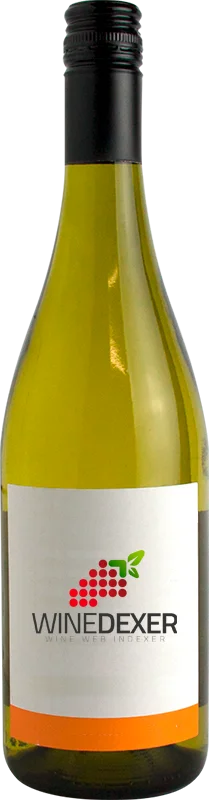
Winery HankaSauvignon Blanc Trocken
 White wine


In the mouth this white wine is a with a nice freshness.
This wine generally goes well with vegetarian, shellfish or goat cheese.
Taste structure of the Sauvignon Blanc Trocken from the Winery Hanka
Light | Bold | |
Dry | Sweet | |
Soft | Acidic |
In the mouth the Sauvignon Blanc Trocken of Winery Hanka in the region of Rheingau is a with a nice freshness.
Food and wine pairings with Sauvignon Blanc Trocken
Pairings that work perfectly with Sauvignon Blanc Trocken



Original food and wine pairings with Sauvignon Blanc Trocken
The Sauvignon Blanc Trocken of Winery Hanka matches generally quite well with dishes of shellfish, vegetarian or goat cheese such as recipes of flying with the wind of the seas, mushroom, bacon and gruyere quiche or pizza with ham, goat cheese and mushrooms.
Details and technical informations about Winery Hanka's Sauvignon Blanc Trocken.
Discover the grape variety: Orion
Interspecific crossing between the optima and the white Villard obtained in 1964 and in Germany by Gerhardt Erich Allweldt (1927-2005). It can be found in Germany, Denmark, the Netherlands, Switzerland, Sweden, Russia, ... not or little known in France.
Last vintages of this wine
The best vintages of Sauvignon Blanc Trocken from Winery Hanka are 0
Informations about the Winery Hanka
The Winery Hanka is one of of the world's greatest estates. It offers 19 wines for sale in the of Rheingau to come and discover on site or to buy online.

The wine region of Rheingau
Rheingau is one of the most important of Germany's 13 Anbaugebiete wine regions. However it is far from the biggest; with 3,076 hectares (7,600 acres) of Vineyard">Vineyards documented in 2012, its output is around one tenth of that from the Pfalz and Rheinhessen regions. Located on the Rhine a 20-minute drive west of Frankfurt, the -gau suffix denotes that it was once a county of the Frankish Empire. The classic Rheingau wine is a DryRiesling with pronounced Acidity and aromas of citrus fruits and smoke-tinged minerality – typically more "masculine" than its equivalent from the Mosel.
The word of the wine: White winemaking
White wines are obtained by fermentation of the juice after pressing. A pre-fermentation maceration is sometimes practiced to extract the aromatic substances from the skins. White wines are normally made from white grapes, but can also be made from red grapes (blanc de noirs). The grapes are then pressed as soon as they arrive at the vat house without maceration in order to prevent the colouring matter contained in the skins from "staining" the wine.