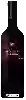
Winery GVS SchachenmannChrottli Blauburgunder Spätlese
 Red wine



In the mouth this red wine is a with a nice freshness.
This wine generally goes well with poultry, beef or veal.
Taste structure of the Chrottli Blauburgunder Spätlese from the Winery GVS Schachenmann
Light | Bold | |
Smooth | Tannic | |
Dry | Sweet | |
Soft | Acidic |
In the mouth the Chrottli Blauburgunder Spätlese of Winery GVS Schachenmann in the region of Schaffhausen is a with a nice freshness.
Food and wine pairings with Chrottli Blauburgunder Spätlese
Pairings that work perfectly with Chrottli Blauburgunder Spätlese



Original food and wine pairings with Chrottli Blauburgunder Spätlese

The Chrottli Blauburgunder Spätlese of Winery GVS Schachenmann matches generally quite well with dishes of beef, veal or game (deer, venison) such as recipes of fondue bourguignonne and accompanying sauces, veal paupiettes with forestry sauce or duck with vanilla (reunion island).
Details and technical informations about Winery GVS Schachenmann's Chrottli Blauburgunder Spätlese.
Discover the grape variety: Grolleau
Grolleau noir is a grape variety that originated in France (Loire Valley). It produces a variety of grape specially used for wine making. It is rare to find this grape to eat on our tables. This variety of grape is characterized by large bunches of grapes of medium size. Grolleau noir can be found in several vineyards: Loire Valley, South West, Cognac, Bordeaux, Provence & Corsica, Rhone Valley, Armagnac, Languedoc & Roussillon.
Last vintages of this wine
The best vintages of Chrottli Blauburgunder Spätlese from Winery GVS Schachenmann are 0, 2014
Informations about the Winery GVS Schachenmann
The Winery GVS Schachenmann is one of of the world's great estates. It offers 91 wines for sale in the of Schaffhausen to come and discover on site or to buy online.

The wine region of Schaffhausen
Schaffhausen is a small canton (state) in northern Switzerland which for its Size produces a relatively large quantity of wine. Being the only Part of Switzerland to cross over the Rhein river, the canton of Schaffhausen is effectively an enclave of Switzerland in southern Germany, and this is Clear from the Germanic wine styles made here. Roughly 70 percent of Schaffhausen wine is red. As with many German regions today, including neighboring Baden, it is made almost entirely from Pinot Noir (Blauburgunder to the German-speaking population here), with a minor supporting role played by the crossings Diolinoir and Garanoir.
The word of the wine: Nervous
Said of a wine that leaves its mark on the palate with its strong characters and a hint of acidity, but without excess.