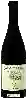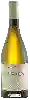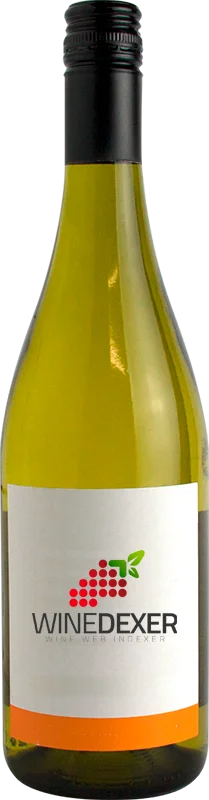
Winery Groupe UccoarComte de Sirac Blanc Moelleux
 Sweet wine


This wine generally goes well with beef, veal or pasta.
Food and wine pairings with Comte de Sirac Blanc Moelleux
Pairings that work perfectly with Comte de Sirac Blanc Moelleux



Original food and wine pairings with Comte de Sirac Blanc Moelleux
The Comte de Sirac Blanc Moelleux of Winery Groupe Uccoar matches generally quite well with dishes of beef, pasta or veal such as recipes of beef strogonoff, pasta with ham and tomato or simple and fragrant roast veal.
Details and technical informations about Winery Groupe Uccoar's Comte de Sirac Blanc Moelleux.
Discover the grape variety: Dabouki
It is most certainly Syrian. By crossing it with the Chasselas, we obtained the Danlas variety, which, by its foliage, somewhat resembles that of its mother the Dabouki. It can be found in Israel, Jordan, Palestine, Syria, Lebanon, Algeria, Tunisia, Morocco, etc. In France it is practically endangered, but it is still listed in the Official Catalogue of Table Grape Varieties, list A1.
Last vintages of this wine
The best vintages of Comte de Sirac Blanc Moelleux from Winery Groupe Uccoar are 2016
Informations about the Winery Groupe Uccoar
The Winery Groupe Uccoar is one of of the world's greatest estates. It offers 173 wines for sale in the of Languedoc-Roussillon to come and discover on site or to buy online.

The wine region of Languedoc-Roussillon
Languedoc (formerly Coteaux du Languedoc) is a key appellation used in the Languedoc-Roussillon wine region of southern France. It covers Dry table wines of all three colors (red, white and rosé) from the entire region, but leaves Sweet and Sparkling wines to other more specialized appellations. About 75% of all Languedoc wines are red, with the remaining 25% split roughly down the middle between whites and rosés. The appellation covers most of the Languedoc region and almost a third of all the vineyards in France.
The word of the wine: Load shedding
Unlike pumping over, the liquid part is completely removed from the tank before being poured over the marc. This allows for a better mixing of the solid particles and the juice.