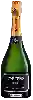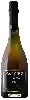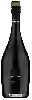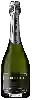
Winery Gran LegadoExtra Brut
 Sparkling wine



In the mouth this sparkling wine is a with a nice freshness.
This wine generally goes well with pork, rich fish (salmon, tuna etc) or shellfish.

Taste structure of the Extra Brut from the Winery Gran Legado
Light | Bold | |
Soft | Acidic | |
Gentle | Fizzy |
In the mouth the Extra Brut of Winery Gran Legado in the region of Rio Grande do Sul is a with a nice freshness.
Food and wine pairings with Extra Brut
Pairings that work perfectly with Extra Brut



Original food and wine pairings with Extra Brut
The Extra Brut of Winery Gran Legado matches generally quite well with dishes of pork, rich fish (salmon, tuna etc) or shellfish such as recipes of fricadella, cannelloni with salmon and spinach or pike quenelles with lobster bisque sauce.
Details and technical informations about Winery Gran Legado's Extra Brut.
Discover the grape variety: Sauvignon blanc
Very expressive, lively aromatic whites with a pale golden colour, crisp palate with fresh acidity, signature aromas of citrus (grapefruit, lime), exotic fruits (passion fruit), boxwood, blackcurrant bud and mineral notes (flint). Star of Sancerre AOC, Pouilly-Fumé AOC and Pessac-Léognan AOC, defines the great whites of the Loire and Bordeaux. French white variety from Bordeaux and the Loire, exported to New Zealand, South Africa and Chile.
Last vintages of this wine
The best vintages of Extra Brut from Winery Gran Legado are 0, 2014, 2011
Informations about the Winery Gran Legado
The Winery Gran Legado is one of of the world's greatest estates. It offers 14 wines for sale in the of Serra Gaúcha to come and discover on site or to buy online.

The wine region of Serra Gaúcha
Brazil's wine capital, Rio Grande do Sul. Specialty: high-quality traditional-method sparklers, fine and fruity (apple, citrus, white flowers), elegant bubble, alpine expression of the south. Still wines mostly European: round fruity Merlot, firm Cabernet Sauvignon, more tannic Tannat, fresh Chardonnay, supple Riesling Italico, fine Pinot Noir. Marked by Italian immigration in 1875, humid climate tempered by altitude.
The wine region of Rio Grande do Sul
Brazil's winemaking heart (~80% of production), Italian tradition. Recognised specialty: traditional-method sparkling wines (espumantes), fresh and fruity, based on Chardonnay and Pinot Noir, among South America's finest. Accessible reds: supple, fruity Merlot (plum, cherry), fleshy Cabernet Sauvignon, dense, tannic Tannat. Round Chardonnay, light Riesling Italico, sweet, floral Moscato whites.
The word of the wine: Biodynamic (agriculture)
Organic agriculture is part of a vision of the world linking the plant and all living beings to the cosmos and basing work in the vineyard and the cellar on the cycles of the moon.