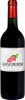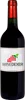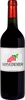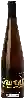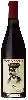
Winery Furstliche Weingalerie Schloss WeikersheimWeikersheimer Tauberberg Tauberschwarz Trocken
 Red wine
This wine generally goes well with
Details and technical informations about Winery Furstliche Weingalerie Schloss Weikersheim's Weikersheimer Tauberberg Tauberschwarz Trocken.
Discover the grape variety: Black Monukka
A very old variety of table grape. It is believed to be a cross between the khourmany kizil or ichkimar and the sultana. In reality, the name Monukka covers several varieties - not all of which are apyrenic - that are somewhat similar and can be found in Armenia, Bulgaria, Slovakia, Moldavia, Italy, Uzbekistan, Afghanistan, Iran, South Africa, the United States (California), etc. In France, the black Monukka is practically not cultivated and is mainly of interest to amateur gardeners. - Synonyms: monucca in South Africa and the United States ..., monukka i siah in Afghanistan, black kischmish, kichmiche, kishmish chernyi, russian seedless, sultanina nera in Italy. This is not true because black sultanina does exist but it is very rare (for all the synonyms of the grape varieties, click here!)
Informations about the Winery Furstliche Weingalerie Schloss Weikersheim
The Winery Furstliche Weingalerie Schloss Weikersheim is one of of the world's greatest estates. It offers 7 wines for sale in the of Languedoc to come and discover on site or to buy online.

The wine region of Languedoc
Languedoc (formerly Coteaux du Languedoc) is a key appellation used in the Languedoc-Roussillon wine region of southern France. It covers Dry table wines of all three colors (red, white and rosé) from the entire region, but leaves Sweet and Sparkling wines to other more specialized appellations. About 75% of all Languedoc wines are red, with the remaining 25% split roughly down the middle between whites and rosés. The appellation covers most of the Languedoc region and almost a third of all the vineyards in France.
The wine region of Languedoc-Roussillon
Languedoc (formerly Coteaux du Languedoc) is a key appellation used in the Languedoc-Roussillon wine region of southern France. It covers Dry table wines of all three colors (red, white and rosé) from the entire region, but leaves Sweet and Sparkling wines to other more specialized appellations. About 75% of all Languedoc wines are red, with the remaining 25% split roughly down the middle between whites and rosés. The appellation covers most of the Languedoc region and almost a third of all the vineyards in France.
The word of the wine: Grand Cru
In Burgundy, the fourth and final level of classification (above the regional, communal and premier cru appellations), designating the wines produced on delimited plots of land (the climats) whose name alone constitutes the appellation. The climats classified as Grand Cru are 32 in the Côte d'Or plus one in Chablis which is divided into 7 distinct climats. Representing barely 1.5% of the production, the Grand Crus are the aristocracy of Burgundy wines.