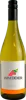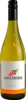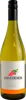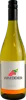
Winery Frédéric LornetSaint-Chinian Rouge
 Red wine
In the mouth this red wine is a powerful with a nice balance between acidity and tannins.
This wine generally goes well with beef, veal or pasta.
Taste structure of the Saint-Chinian Rouge from the Winery Frédéric Lornet
Light | Bold | |
Smooth | Tannic | |
Dry | Sweet | |
Soft | Acidic |
In the mouth the Saint-Chinian Rouge of Winery Frédéric Lornet in the region of Languedoc-Roussillon is a powerful with a nice balance between acidity and tannins.
Food and wine pairings with Saint-Chinian Rouge
Pairings that work perfectly with Saint-Chinian Rouge



Original food and wine pairings with Saint-Chinian Rouge
The Saint-Chinian Rouge of Winery Frédéric Lornet matches generally quite well with dishes of beef, pasta or veal such as recipes of beef with cider, marco's pasta with bacon or pork tenderloin with chorizo and peppers.
Details and technical informations about Winery Frédéric Lornet's Saint-Chinian Rouge.
Discover the grape variety: Villard blanc
Interspecific crossing between 6468 Seibel and 6905 Seibel or subéreux, obtained by the House of Seyve-Villard of Saint Vallier in the Drôme. Together with Villard noir or 18315 Seyve-Villard, these were the two most widely propagated direct-producing hybrids. The white Villard has also been used as a progenitor for new varieties. It can be found in Hungary, Mexico, Brazil, Canada, the United States and Japan. In the south of France, some old vines still exist. We have also found it in private homes where it is grown in pergolas for the consumption of its excellent grapes at full maturity. Today, it is on the verge of extinction, although it is registered in the Official Catalogue of wine grape varieties, list A1.
Informations about the Winery Frédéric Lornet
The Winery Frédéric Lornet is one of of the world's great estates. It offers 36 wines for sale in the of Saint-Chinian to come and discover on site or to buy online.

The wine region of Saint-Chinian
Saint-Chinian is an appellation in the Languedoc-roussillon">Languedoc-Roussillon wine region of southern France. It is located between Minervois and Faugeres, which produce similar styles of robust red wine from similar grapes and in a similar landscape. It is also adjacent to the Muscat de Saint-Jean-de-Minervois appellation, which produces Sweet white wines. Therefore, the diversity of the Languedoc region is well demonstrated in this small area.
The wine region of Languedoc-Roussillon
Languedoc (formerly Coteaux du Languedoc) is a key appellation used in the Languedoc-Roussillon wine region of southern France. It covers Dry table wines of all three colors (red, white and rosé) from the entire region, but leaves Sweet and Sparkling wines to other more specialized appellations. About 75% of all Languedoc wines are red, with the remaining 25% split roughly down the middle between whites and rosés. The appellation covers most of the Languedoc region and almost a third of all the vineyards in France.
The word of the wine: Phylloxera
Aphid that came from America and ravaged European vineyards at the end of the 19th century. It lives on the roots of the vine, from which it pumps the sap. The only vines capable of resisting it had to be imported from the United States, and then grafted onto their root system the wood of traditional French grape varieties. Today, grafted vines are always planted.