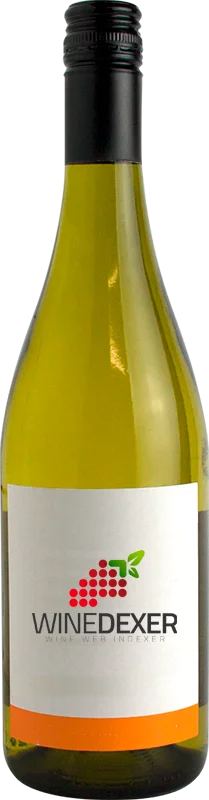
Winery FrassinellaVeneto Canneviol Bianco
 White wine
In the mouth this white wine is a powerful.
This wine generally goes well with lean fish, shellfish or mature and hard cheese.
Taste structure of the Veneto Canneviol Bianco from the Winery Frassinella
Light | Bold | |
Dry | Sweet | |
Soft | Acidic |
In the mouth the Veneto Canneviol Bianco of Winery Frassinella in the region of Lombardia is a powerful.
Food and wine pairings with Veneto Canneviol Bianco
Pairings that work perfectly with Veneto Canneviol Bianco



Original food and wine pairings with Veneto Canneviol Bianco


The Veneto Canneviol Bianco of Winery Frassinella matches generally quite well with dishes of pasta, shellfish or mature and hard cheese such as recipes of cannelloni with salmon and spinach, spaghetti with squid ink (italy) or old-fashioned aligot.
Details and technical informations about Winery Frassinella's Veneto Canneviol Bianco.
Discover the grape variety: Sweet Sapphire
Intra-specific cross between Beitamouni and C22-121 obtained in 2004 by David Cain at the I.F.G. of Bakersfield in California (United States). Its cultivation started in 2007. It is already known in the United States, Brazil, Australia, South Africa ... almost unknown in France. It should be noted that this variety is very much in demand in China, where it represents an important market.
Informations about the Winery Frassinella
The Winery Frassinella is one of of the world's greatest estates. It offers 8 wines for sale in the of Lombardia to come and discover on site or to buy online.

The wine region of Lombardia
Lombardy is one of Italy's largest and most populous regions, located in the north-central Part of the country. It's home to a handful of popular and well-known wine styles, including the Bright, cherry-scented Valtellina and the high-quality Sparkling wines Franciacorta and Oltrepo Pavese Metodo Classico. Lombardy is Italy's industrial powerhouse, with the country's second largest city (Milan) as its regional capital. Despite this, the region has vast tracts of unspoiled countryside, home to many small wineries that produce a significant portion of the region's annual wine production of 1.
The word of the wine: Sulphites
Chemical compounds derived from sulphur (better known in the wine world as SO2) and used by winemakers for their antiseptic, antioxidant and antioxidant properties.