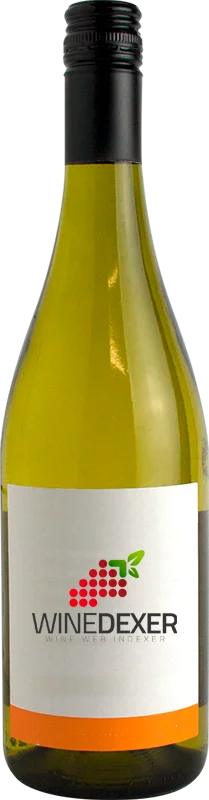
Château La RocailleGraves Blanc
 White wine
In the mouth this white wine is a powerful.
This wine generally goes well with pork, vegetarian or poultry.
Taste structure of the Graves Blanc from the Château La Rocaille
Light | Bold | |
Dry | Sweet | |
Soft | Acidic |
In the mouth the Graves Blanc of Château La Rocaille in the region of Bordeaux is a powerful.
Food and wine pairings with Graves Blanc
Pairings that work perfectly with Graves Blanc



Original food and wine pairings with Graves Blanc


The Graves Blanc of Château La Rocaille matches generally quite well with dishes of pork, vegetarian or poultry such as recipes of sauerkraut of the sea in casserole, quiche with leeks and fresh salmon from flo or turkey blanquette with mushrooms.
Details and technical informations about Château La Rocaille's Graves Blanc.
Discover the grape variety: Oberlin noir
Interspecific crossing between riparia Millardet and gamay obtained by Philip Christian Oberlin (1831-1915) who also created in 1897 the Oberlin Viticultural Institute in Colmar (Haut Rhin). This direct-producing hybrid was widely multiplied in the northeast region of France, from Alsace to Burgundy, also in the Loire Valley and in the Centre where our photographs were taken. Today, Oberlin noir is practically no longer cultivated, but a few vines exist here and there, producing very pleasant, albeit atypical, wines. It is nevertheless registered in the Official Catalogue of Vine Varieties, list A1. - Synonymy: 595 Oberlin (for all the synonyms of the grape varieties, click here!).
Informations about the Château La Rocaille
The Château La Rocaille is one of of the world's greatest estates. It offers 6 wines for sale in the of Graves to come and discover on site or to buy online.

The wine region of Graves
Graves is a wine region on the left bank of the Bordeaux region of France, characterized by the gravel soils that give it its name. Unique among the sub-regions of Bordeaux, Graves is equally respected for its red and white wines. The AOC Graves, which covers both red and white wines, is the catch-all appellation of the district. A typical Graves red is based on the classic Bordeaux grapes, Cabernet Sauvignon and Merlot, with Cabernet Franc, Malbec and Petit Verdot sometimes in a supporting role.
The wine region of Bordeaux
Bordeaux, in southwestern France, is one of the most famous, prestigious and prolific wine regions in the world. The majority of Bordeaux wines (nearly 90% of the production Volume) are the Dry, medium and Full-bodied red Bordeaux blends for which it is famous. The finest (and most expensive) are the wines of the great châteaux of Haut-Médoc and the right bank appellations of Saint-Émilion and Pomerol. The former focuses (at the highest level) on Cabernet Sauvignon, the latter on Merlot.
The word of the wine: Pulp
Fleshy and juicy part of the grape berry, it contains sugars, organic acids and various nitrogenous and mineral compounds.