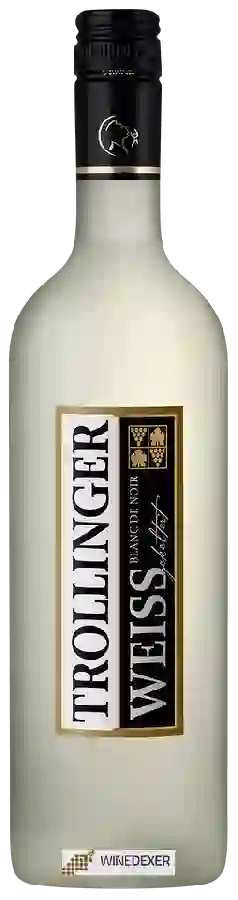
Winery Flein-TalheimTrollinger Weissgekeltert Blanc de Noir
 White wine


This wine generally goes well with
Details and technical informations about Winery Flein-Talheim's Trollinger Weissgekeltert Blanc de Noir.
Discover the grape variety: Jurançon blanc
Mainly cultivated in the south-western part of France, white Jurançon is part of the Cognac and Armagnac grape varieties. It is not related to Jurançon Noir, even though it is quite similar. This grape variety comes from a cross with the white gouais and is in the process of disappearing. Its young leaves are bubbled and downy. The more mature ones have 5 lobes and a petiolar sinus. Jurançon Blanc has small, compact clusters and medium-sized berries. It is hardy and vigorous. Jurançon blanc is associated with an average budburst. This variety is upright. To avoid exhaustion, it is recommended to prune it short. Jurançon often suffers from gray mold, mildew and powdery mildew. Its maturity is early in the third period. In other words, this grape variety matures 20 days after Chasselas. The white wines obtained with white Jurançon are low in alcohol, acid and neutral. If they are distilled, the result is an eau de vie that is not very strong and not very marked.
Last vintages of this wine

The best vintages of Trollinger Weissgekeltert Blanc de Noir from Winery Flein-Talheim are 2018, 2013, 0, 2016
Informations about the Winery Flein-Talheim
The Winery Flein-Talheim is one of of the world's greatest estates. It offers 84 wines for sale in the of Württemberg to come and discover on site or to buy online.

The wine region of Württemberg
Rare predominantly red region in Germany (nearly 70%). Supple, fruity everyday reds: light, crisp Trollinger (Schiava) with red fruits, more structured, spicy, deep Lemberger (Blaufränkisch), generous Schwarzriesling (Pinot Meunier). Riesling king of whites (>2,000 ha), lively and mineral, citrus and green apple. Germany's 4th region (11,500 ha) on the Neckar slopes around Heilbronn and Stuttgart.
The word of the wine: Viscosity
Consistency of wine reminiscent of the tactile sensation of sugar syrup with varying degrees of fluidity, due to the alcohol and natural sugar in the grapes present in sweet wines. In excess, this sensation can make the wine pasty and heavy. To the eye, viscosity is referred to as tears.