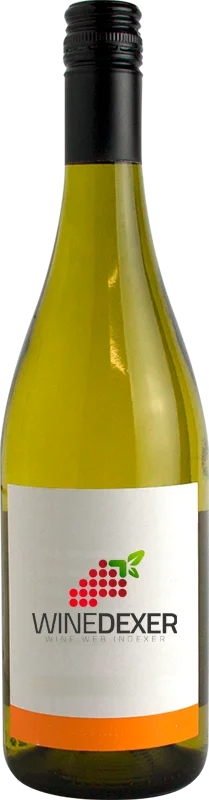
Winery Fitz & PetrikBreslava Biele Suché
 White wine


This wine generally goes well with
Details and technical informations about Winery Fitz & Petrik's Breslava Biele Suché.
Discover the grape variety: Herbemont
The origin of this American interspecific hybrid of the southern Vitis Aestivalis group, also called Vitis Bourquiniana, is not known for certain. In South Carolina (United States), it was propagated in the early 1800s by a Frenchman, Nicholas Herbemont (1771-1839), who found his first origins in Champagne. In France, it is one of six hybrids prohibited since 1935 (included in European regulations): Clinton, Herbemont, Isabelle, Jacquez, Noah and Othello. The Herbemont is very similar to the Jacquez - also called black spanish or lenoir - and has practically disappeared in favour of the latter.
Last vintages of this wine
The best vintages of Breslava Biele Suché from Winery Fitz & Petrik are 0
Informations about the Winery Fitz & Petrik
The Winery Fitz & Petrik is one of of the world's greatest estates. It offers 8 wines for sale in the of Južnoslovenská to come and discover on site or to buy online.

The wine region of Južnoslovenská
The wine region of Južnoslovenská of Slovak Republic. Wineries and vineyards like the Chateau Belá or the Domaine Strekov 1075 produce mainly wines white, red and pink. The most planted grape varieties in the region of Južnoslovenská are Cabernet-Sauvignon, Riesling and Pinot gris, they are then used in wines in blends or as a single variety. On the nose of Južnoslovenská often reveals types of flavors of grapefruit, slate or oil and sometimes also flavors of non oak, earth or microbio.
The word of the wine: Presses
The juice that results from pressing the grapes after fermentation. At the end of the maceration, the vats are emptied, the first juice obtained is called the free-run wine and the marc remaining at the bottom of the vat is then pressed to give the press wine. We say more quickly "the presses". Their quality varies according to the vintage and the maceration. A too vigorous extraction releases the tannins of pips and the wine of press can then prove to be very astringent. Often the winemaker raises it separately, deciding later whether or not to incorporate it totally or partially into the grand vin.