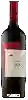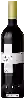
Winery Finca el OrigenSyrah
 Red wine


In the mouth this red wine is a powerful with a lot of tannins present in the mouth.
This wine generally goes well with poultry, beef or game (deer, venison).
Taste structure of the Syrah from the Winery Finca el Origen
Light | Bold | |
Smooth | Tannic | |
Dry | Sweet | |
Soft | Acidic |
In the mouth the Syrah of Winery Finca el Origen in the region of Mendoza is a powerful with a lot of tannins present in the mouth.
Wine flavors and olphactive analysis

Food and wine pairings with Syrah
Pairings that work perfectly with Syrah



Original food and wine pairings with Syrah

The Syrah of Winery Finca el Origen matches generally quite well with dishes of beef, lamb or game (deer, venison) such as recipes of boeuf lôc lac (cambodia), lamb tagine with olives and honey or conejo al ajillo (spain).
Details and technical informations about Winery Finca el Origen's Syrah.
Discover the grape variety: Souvignier gris
Interspecific cross between Cabernet Sauvignon and Bronner obtained in 1983 by Norbert Becker in Freiburg (Germany). A resistance gene has been identified to oidium, no gene to mildew. It can be found in Germany, but also in Belgium, the Netherlands, Italy, ... and in France.
Last vintages of this wine

The best vintages of Syrah from Winery Finca el Origen are 2012, 2015, 2014, 2013 and 0.
Informations about the Winery Finca el Origen
The Winery Finca el Origen is one of of the world's greatest estates. It offers 39 wines for sale in the of Mendoza to come and discover on site or to buy online.

The wine region of Mendoza
Mendoza is by far the largest wine region in Argentina. Located on a high-altitude plateau at the edge of the Andes Mountains, the province is responsible for roughly 70 percent of the country's annual wine production. The French Grape variety Malbec has its New World home in the vineyards of Mendoza, producing red wines of great concentration and intensity. The province Lies on the western edge of Argentina, across the Andes Mountains from Chile.
The word of the wine: Deposit
Solid particles that can naturally coat the bottom of a bottle of wine. It is rather a guarantee that the wine has not been mistreated: in fact, to avoid the natural deposit, rather violent processes of filtration or cold passage (- 7 or - 8 °C) are used in order to precipitate the tartar (the small white crystals that some people confuse with crystallized sugar: just taste to dissuade you from it)