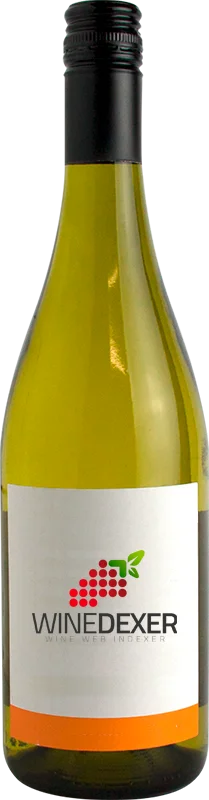
Winery Feuille d'OrChasselas
 White wine


In the mouth this white wine is a with a nice freshness.
This wine generally goes well with poultry, lean fish or mild and soft cheese.
Taste structure of the Chasselas from the Winery Feuille d'Or
Light | Bold | |
Dry | Sweet | |
Soft | Acidic |
In the mouth the Chasselas of Winery Feuille d'Or in the region of Genève is a with a nice freshness.


Food and wine pairings with Chasselas
Pairings that work perfectly with Chasselas



Original food and wine pairings with Chasselas

The Chasselas of Winery Feuille d'Or matches generally quite well with dishes of poultry, lean fish or mild and soft cheese such as recipes of genuine chicken tagine olive and lemon confit tagine with argan oil, brazilian moqueca or lasagna bolognese.
Details and technical informations about Winery Feuille d'Or's Chasselas.
Discover the grape variety: Chasselas
Chasselas rosé is a grape variety that originated in France. It produces a variety of grape used to make wine. However, it can also be found eating on our tables! This variety of vine is characterized by medium-sized bunches and medium-sized grapes. Chasselas rosé can be found in several vineyards: Alsace, South-West, Cognac, Bordeaux, Loire Valley, Rhone Valley, Languedoc & Roussillon, Provence & Corsica, Savoie & Bugey, Beaujolais.
Last vintages of this wine

The best vintages of Chasselas from Winery Feuille d'Or are 2015, 2014, 0, 2017 and 2013.
Informations about the Winery Feuille d'Or
The Winery Feuille d'Or is one of of the world's greatest estates. It offers 7 wines for sale in the of Genève to come and discover on site or to buy online.

The wine region of Genève
Geneva, at the western end of Lac Léman (Lake Geneva), is the second-largest city in Switzerland and the country's third-largest wine producing canton after Valais and Vaud. Although not famously associated with wine, the city and its environs are home to numerous Vineyards and wineries, some within just a few miles of the Center. At 1,400 hectares (3,500 acres), Geneva accounts for 10 percent of the country's vineyard area. Gamay is the predominant variety here, with the Swiss workhorse Chasselas (often labelled "Fendant") and Pinot Noir taking second and third place respectively.
The word of the wine: AOC
Appellation d'origine contrôlée. The most prestigious category of French wines created in the 1930s on the basis of quality criteria defined by a geographical delimitation, a chosen grape variety and precise production rules.