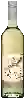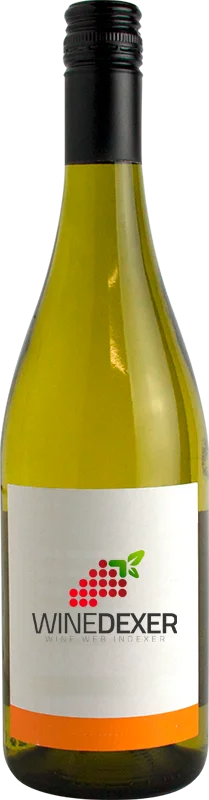
Winery FeligrenoGrauburgunder
 White wine
In the mouth this white wine is a .
This wine generally goes well with pork, cured meat or mushrooms.
Taste structure of the Grauburgunder from the Winery Feligreno
Light | Bold | |
Dry | Sweet | |
Soft | Acidic |
In the mouth the Grauburgunder of Winery Feligreno in the region of Hessische Bergstrasse is a .
Food and wine pairings with Grauburgunder
Pairings that work perfectly with Grauburgunder


Original food and wine pairings with Grauburgunder

The Grauburgunder of Winery Feligreno matches generally quite well with dishes of pork, spicy food or mushrooms such as recipes of ollada (catalonia), lomo saltado or blanquette of veal in the old way (self-cooker).
Details and technical informations about Winery Feligreno's Grauburgunder.
Discover the grape variety: Boskoop glory
It is said to be a natural interspecific cross between a vitis vinifera and a vitis labrusca, the isabelle variety being a better known example. It was discovered by Gérard Van Tol Boskoop and imported into Germany by Günter Pfeiffer. It can also be found in the Netherlands, Belgium and England, where it is commonly grown in greenhouses. We noted that the schuyler looks somewhat like the Boskoop glory even if the origins, each time put forward, are quite different, to be followed!
Informations about the Winery Feligreno
The Winery Feligreno is one of of the world's greatest estates. It offers 5 wines for sale in the of Hessische Bergstrasse to come and discover on site or to buy online.

The wine region of Hessische Bergstrasse
The wine region of Hessische Bergstrasse of Germany. Wineries and vineyards like the Domaine Griesel & Compagnie or the Domaine Simon-Bürkle produce mainly wines white, red and sparkling. The most planted grape varieties in the region of Hessische Bergstrasse are Riesling, Chardonnay and Dornfelder, they are then used in wines in blends or as a single variety. On the nose of Hessische Bergstrasse often reveals types of flavors of microbio, tree fruit or citrus fruit and sometimes also flavors of red fruit, earth or tropical fruit.
The word of the wine: Velouté
Said of a wine that is soft and caressing in the mouth.