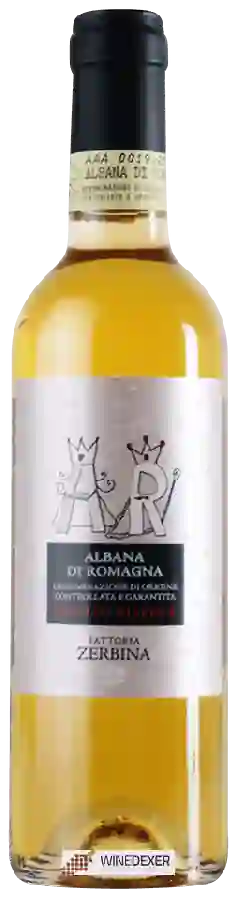
Winery Fattoria ZerbinaAR Albana di Romagna Passito Riserva
 Sweet wine


This wine generally goes well with

Details and technical informations about Winery Fattoria Zerbina's AR Albana di Romagna Passito Riserva.
Discover the grape variety: Courbu
Structured and aromatic dry or sweet whites with a pale golden hue, an ample palate with preserved acidity and signature aromas of yellow fruits (apricot, peach), citrus, white flowers and honeyed notes in the sweet style. A component of Jurançon AOC, Pacherenc du Vic-Bilh AOC and Béarn AOC blends, it defines the aromatic richness of Béarn whites. French autochthonous variety from the South-West, mainly grown in Béarn and Madiran.
Last vintages of this wine

The best vintages of AR Albana di Romagna Passito Riserva from Winery Fattoria Zerbina are 2010, 2006, 0
Informations about the Winery Fattoria Zerbina
The Winery Fattoria Zerbina is one of of the world's greatest estates. It offers 20 wines for sale in the of Albana di Romagna to come and discover on site or to buy online.

The wine region of Albana di Romagna
First Italian DOCG for white wine (Emilia-Romagna, 1987, around Forli, Ravenna, Bologna): Albana the exclusive white signature — abundant sugar and high acidity, skin and seed tannins. Four styles: dry, light and young; amabile fresh and fruity; dolce delicately sweet; passito the most internationally recognised, rich, succulent and seductive. Clays, limestone, marls and fossil-rich sands, Mediterranean climate tempered by Adriatic breezes.
The wine region of Emilia-Romagna
Kingdom of Lambrusco: fresh, fruity sparkling reds (blackberry, cherry, violet), from gourmet dry to convivial off-dry, perfect with local charcuterie. World's best-selling sparkling wine on the Emilia side (Sorbara, Grasparossa, Salamino). East, Romagna: supple fruity Sangiovese, Albana (Italy's 1st white DOCG, 1987) ample and almondy. Also red Gutturnio and white Pignoletto.
The word of the wine: Varietal wine
Name given to the local wine (IGP), produced from a single grape variety that gives the wine its characteristics of structure and aroma. The Languedoc is the leading producer of this type of wine, from most of the major French grape varieties.


