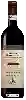
Winery FalchiniCastel Selva Bianco
 wine
wine
This wine generally goes well with
The Castel Selva Bianco of the Winery Falchini is in the top 0 of wines of San Gimignano.
Details and technical informations about Winery Falchini's Castel Selva Bianco.
Discover the grape variety: Dauphine
A natural intraspecific cross between the ohanès and the Beirut date tree - also called afuz ali - obtained in South Africa and multiplied since 1983 by the Institute of Viticultural and Enological Research of Stellenbosch. Almost unknown in the rest of the wine world, it can however be found in Portugal, ... .
Informations about the Winery Falchini
The Winery Falchini is one of of the world's great estates. It offers 15 wines for sale in the of San Gimignano to come and discover on site or to buy online.

The wine region of San Gimignano
The wine region of San Gimignano is located in the region of Toscane of Italy. Wineries and vineyards like the Domaine Panizzi or the Domaine Il Colombaio di Santachiara produce mainly wines red, white and sweet. The most planted grape varieties in the region of San Gimignano are Sangiovese, Merlot and Cabernet-Sauvignon, they are then used in wines in blends or as a single variety. On the nose of San Gimignano often reveals types of flavors of blackberry, oaky or dried fruit and sometimes also flavors of floral, red fruit or citrus fruit.
The wine region of Tuscany
Tuscany is one of the most famous and prolific wine regions in Europe. It is best known for its Dry red wines made from Sangiovese grapes, which dominate production. These include Chianti, Brunello di Montalcino and Vino Nobile di Montepulciano. The region's Vin Santo is also highly prized, as are its passito dessert wines, though these are produced in comparatively tiny quantities.
The word of the wine: Oenologist
Specialist in wine-making techniques. It is a profession and not a passion: one can be an oenophile without being an oenologist (and the opposite too!). Formerly attached to the Faculty of Pharmacy, oenology studies have become independent and have their own university course. Learning to make wine requires a good chemical background but also, increasingly, a good knowledge of the plant. Some oenologists work in laboratories (analysis). Others, the consulting oenologists, work directly in the properties.