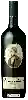
Winery EurovinsDuc de Saint Brian Médoc
 Red wine



This wine is a blend of 3 varietals which are the Cabernet franc, the Cabernet-Sauvignon and the Merlot.
In the mouth this red wine is a powerful with a nice balance between acidity and tannins.
This wine generally goes well with poultry, beef or game (deer, venison).

Taste structure of the Duc de Saint Brian Médoc from the Winery Eurovins
Light | Bold | |
Smooth | Tannic | |
Dry | Sweet | |
Soft | Acidic |
In the mouth the Duc de Saint Brian Médoc of Winery Eurovins in the region of Bordeaux is a powerful with a nice balance between acidity and tannins.
Food and wine pairings with Duc de Saint Brian Médoc
Pairings that work perfectly with Duc de Saint Brian Médoc



Original food and wine pairings with Duc de Saint Brian Médoc

The Duc de Saint Brian Médoc of Winery Eurovins matches generally quite well with dishes of beef, lamb or game (deer, venison) such as recipes of oxtail confit in red wine, lamb with vermicelli or duck confit parmentier.
Details and technical informations about Winery Eurovins's Duc de Saint Brian Médoc.
Discover the grape variety: Cabernet franc
Supple, fragrant reds with fine tannins and vibrant freshness, showing raspberry, violet, green pepper, pencil lead and gentle spice aromas. Star of the Loire as a single variety (Chinon, Bourgueil, Saumur-Champigny) and of the right bank of Bordeaux in blends (Cheval Blanc at 60%). Also in semi-dry Anjou rosés. A historic Bordeaux variety, parent of Cabernet-Sauvignon, Merlot and Carmenère.
Last vintages of this wine
The best vintages of Duc de Saint Brian Médoc from Winery Eurovins are 2016, 2015, 2013
Informations about the Winery Eurovins
The Winery Eurovins is one of of the world's greatest estates. It offers 95 wines for sale in the of Médoc to come and discover on site or to buy online.

The wine region of Médoc
Kingdom of Cabernet Sauvignon on siliceous gravel, left bank of the Gironde. Structured, age-worthy reds with signature notes of blackcurrant, blackberry, cedar, graphite, tobacco and minty hints, firm tannins. Blend: majority Cabernet Sauvignon, Merlot for velvet, Cabernet Franc for perfume, Petit Verdot and Malbec. To the south, Haut-Médoc and 1855 communal appellations (Pauillac, Margaux).
The wine region of Bordeaux
World-renowned age-worthy reds, led by round Merlot (plum, black fruit) or firm Cabernet Sauvignon (blackcurrant, cedar, graphite), blended with Cabernet Franc and Petit Verdot for tannic structure. Structured Médoc and Graves, velvety Saint-Émilion and Pomerol. Also crisp dry whites (Sauvignon/Sémillon) and opulent sweet Sauternes with honey and candied fruit. A 110,000 ha Gironde vineyard, 65 appellations, cradle of the 1855 classified growths.
The word of the wine: Local wine
Table wine, but with the origin indicated. It corresponds to a particular legislation: the freedom to use grape varieties is greater than for the AOC, but the quality criteria such as the approval tastings can sometimes be more demanding. The legislation is still evolving, but for the moment there are three levels: regional (e.g. Vin de Pays d'Oc), departmental and local (e.g. Côtes de Thongue).