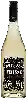
Winery Fernando CastroLe Chatoniere Brut
 Sparkling wine


In the mouth this sparkling wine is a with a nice vivacity and a fine and pleasant bubble.
This wine generally goes well with appetizers and snacks, lean fish or shellfish.

Taste structure of the Le Chatoniere Brut from the Winery Fernando Castro
Light | Bold | |
Soft | Acidic | |
Gentle | Fizzy |
In the mouth the Le Chatoniere Brut of Winery Fernando Castro in the region of Castille is a with a nice vivacity and a fine and pleasant bubble.
Food and wine pairings with Le Chatoniere Brut
Pairings that work perfectly with Le Chatoniere Brut



Original food and wine pairings with Le Chatoniere Brut

The Le Chatoniere Brut of Winery Fernando Castro matches generally quite well with dishes of shellfish, appetizers and snacks or lean fish such as recipes of armorican-style squid, macaroons foie gras / figs or sole fillets au gratin with mushrooms and shallots.
Details and technical informations about Winery Fernando Castro's Le Chatoniere Brut.
Discover the grape variety: Baco
Lively whites with pronounced acidity, a pale golden robe, a light, nervous palate, and discrete aromas of citrus (lemon) and slightly foxy hybrid notes. Disease-resistant. Mainly used for distillation into Armagnac; represents a significant share of the Landes vineyards and defines the aromatic identity of Gascon eaux-de-vie (characteristic rancio notes). French white hybrid obtained in 1898 by François Baco (folle blanche × noah).
Last vintages of this wine
The best vintages of Le Chatoniere Brut from Winery Fernando Castro are 2017, 0
Informations about the Winery Fernando Castro
The Winery Fernando Castro is one of of the world's great estates. It offers 94 wines for sale in the of Castille to come and discover on site or to buy online.

The wine region of Castille
Cradle of great Castilian reds, high-altitude plateaus (450-1000 m) along the Duero. Tempranillo king (aka Tinta de Toro, Tinto Fino): powerful, concentrated, structured reds with notes of black cherry, plum, leather, tobacco and spice, firm tannins from altitude and cool nights. Stars: Ribera del Duero (Vega Sicilia, Pingus), fleshy Toro, Bierzo (floral, mineral Mencía). Lively, herbaceous Verdejo whites from Rueda.
The word of the wine: Tiled
Said of the colour of an evolved wine that has taken on brick and orange hues.