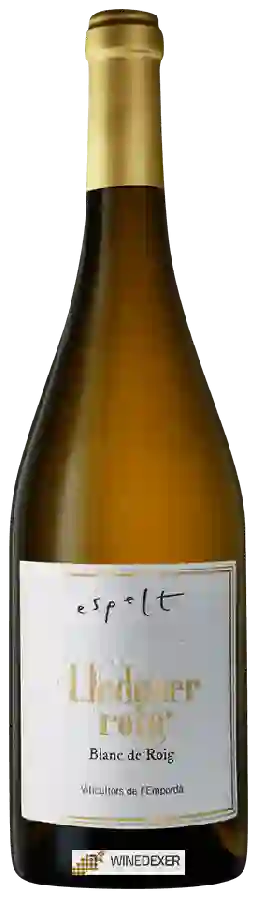
Winery EspeltLledoner Roig Blanc de Roig
 White wine


This wine generally goes well with

Wine flavors and olphactive analysis

Details and technical informations about Winery Espelt's Lledoner Roig Blanc de Roig.
Discover the grape variety: Fortana
Light, lively reds with a clear ruby colour, smooth tannins and a fresh, airy palate; signature aromas of red fruits (cherry, raspberry), gentle spices and Emilian herbal notes. Also made as a refreshing frizzante. Star of Bosco Eliceo DOC, the signature of reds from the coastal sandy soils of the Adriatic. Productive, hardy indigenous Italian black grape from Emilia-Romagna.
Last vintages of this wine
The best vintages of Lledoner Roig Blanc de Roig from Winery Espelt are 2017, 2013, 2018, 2015 and 0.
Informations about the Winery Espelt
The Winery Espelt is one of of the world's greatest estates. It offers 40 wines for sale in the of Empordà to come and discover on site or to buy online.

The wine region of Empordà
Catalan DO of the northeast under the tramontana wind, between Figueres and the coast, schist and granite terroir. Fresh, gastronomic rosés are a recognised speciality: Garnatxa and Cariñena by saignée with notes of strawberry, raspberry, citrus, Mediterranean herbs and a marine saline touch. Supple reds of Garnatxa (cherry, garrigue) and Cariñena (blackberry, spice). Garnatxa de l'Empordà as oxidative natural sweet (fig, walnut, caramel).
The wine region of Catalogne
Cradle of Cava (~95% of Spanish output, traditional method): Macabeo, Xarel-lo, Parellada trilogy, fine fruity bubble. Quality peak in Priorat DOCa: dense, mineral reds on llicorella (schist), old-vine Garnacha and Cariñena with black fruit, garrigue notes, firm tannins. Also Penedès, fleshy Montsant, sunny Empordà, Costers del Segre. Mediterranean.
The word of the wine: Extraction
All the methods (pumping over, punching down) that allow the colour and tannins to be extracted from the grape skin during maceration, before fermentation begins. It is also possible to macerate after fermentation, but gently, so as not to extract the tannins from the seeds, which are greener. Because of its solvent power, alcohol favours extraction.