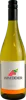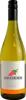
Winery Ernst BretzKerner Beerenauslese
 Sweet wine
This wine generally goes well with
Wine flavors and olphactive analysis

Details and technical informations about Winery Ernst Bretz's Kerner Beerenauslese.
Discover the grape variety: Kerner
Intraspecific crossing between frankenthal and riesling obtained in Germany in 1929 by August Karl Herold (1902/1973). In 1951 and by crossing it with the sylvaner, we obtained the juwel. It should be noted that there is a mutation of Kerner, discovered in 1974 and bearing the name of kernling, with grapes of pink-grey to red-grey colour at full maturity. Kerner can be found in Germany, Belgium, Slovenia, Austria, Switzerland, Italy, South Africa, Australia, the United States, Canada, Japan... practically unknown in France except in a few Moselle vineyards.
Informations about the Winery Ernst Bretz
The Winery Ernst Bretz is one of of the world's great estates. It offers 90 wines for sale in the of Rheinhessen to come and discover on site or to buy online.

The wine region of Rheinhessen
Rheinhessen is Germany's largest region for producing the quality wines of the Qualitätswein bestimmter Anbaugebiete (QbA) and Prädikatswein designations, with roughly 26,500 hectares (65,000 acres) of Vineyard">Vineyards as of 2014. Many of its most significant viticultural areas are favorably influenced by the Rhine river, which runs aLong its North and eastern borders. The Rhine, along with the Nahe river to the west and the Haardt mountains to its South, form a natural border. Rheinhessen covers an area south of Rheingau, north of Pfalz and east of Nahe, and is located within the Rhineland-Palatinate federal state.
The word of the wine: Performance
Quantity of grapes harvested per hectare. In AOC, the average yield is limited on the proposal of the appellation syndicate, validated by the Inao. The use of high-performance plant material (especially clones) and better control of vine diseases have increased yields. This is not without consequences on the quality of the wines (dilution) and on the state of the market (too much wine). We must not over-simplify: low yields are not synonymous with quality, and it is often in years with generous harvests that we find the greatest vintages (1982 and 1986 in Bordeaux, 1996 in Champagne, 1990 and 2005 in Burgundy...).